Sand Loop Level 371 Solution Walkthrough | Sand Loop 371
How to solve Sand Loop level 371? Get instant solution for Sand Loop 371 with our step by step solution & video walkthrough.
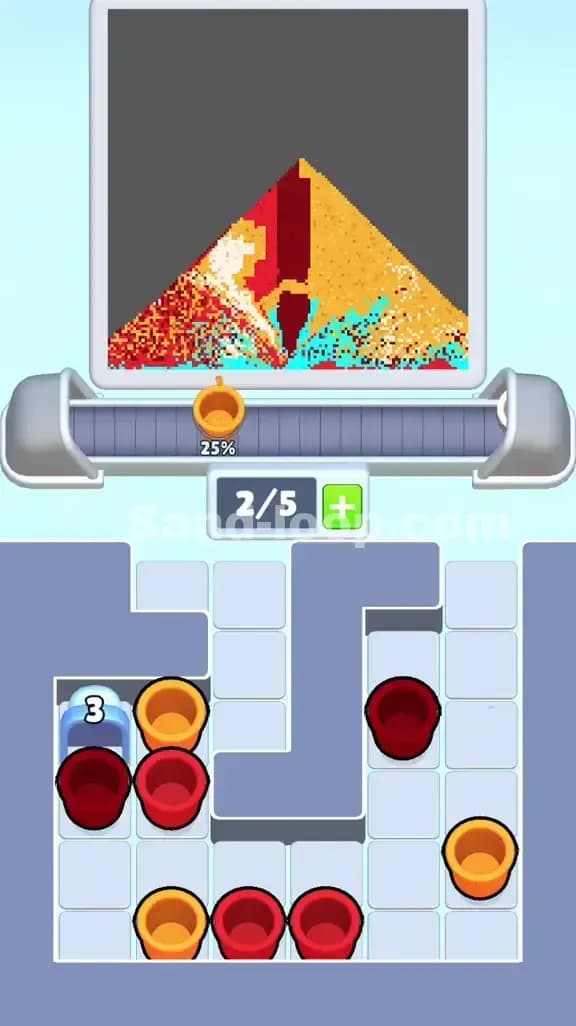
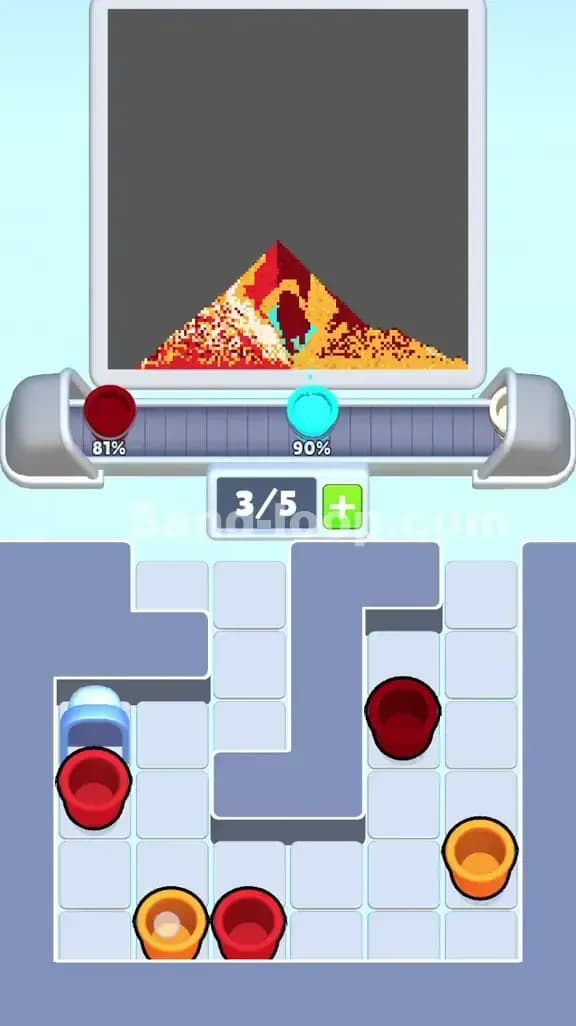
Sand Loop Level 371 Guide: The Golden Mailbox Puzzle
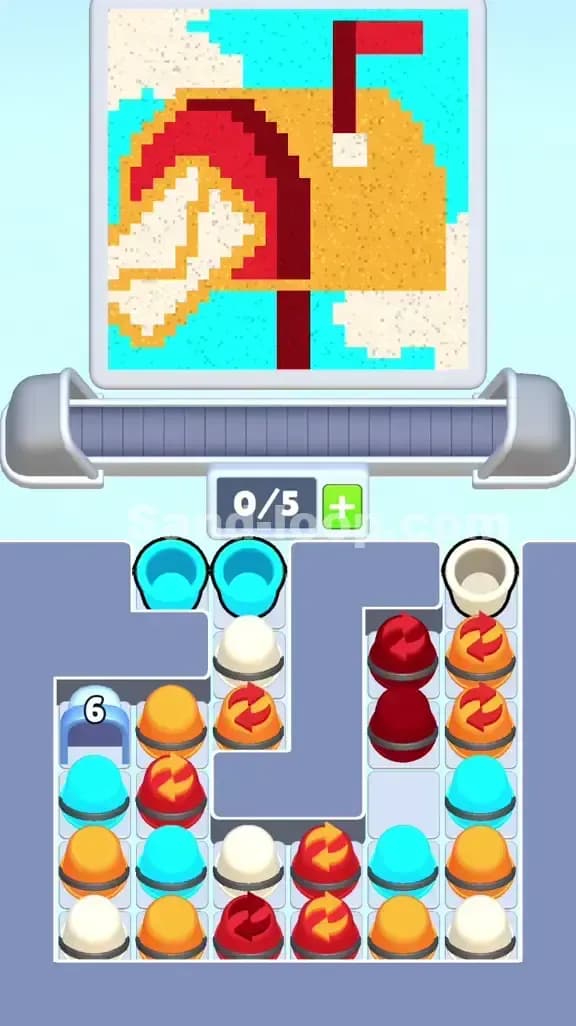
This level features a charming, pixelated image of a Golden Mailbox set against a bright blue sky. It looks peaceful, but the logic required to paint it is anything but relaxing. Sand Loop Level 371 is a Logic Level, specifically designed to test your inventory management rather than your raw speed. The primary challenge isn't the sand falling too fast; it’s the restricted access to your colors.
The color palette is distinct and relies on high contrast:
- Golden Orange/Yellow: The primary color for the mailbox body.
- Deep Red: Used for the mailbox post (bottom center) and the flag (top right).
- Bright White: Essential for the envelopes peeking out of the box and the clouds.
- Cyan Blue: The sky background.
You are working with a 5-slot capacity on your conveyor belt. This is a standard size, but because you have a "Lock" mechanic (the Ice Block), those 5 slots will feel incredibly cramped if you aren't cycling cups efficiently.
Sand Loop Level 371 Solution: Analyzing the Mailbox
Before you tap a single cup, look at the target image on the top screen. This isn't just a blob of color; it has layers.
The Base Layer (Background): The Cyan sky is the backdrop, but it wraps around the mailbox. Usually, you paint backgrounds last, but here, the sky touches the bottom edges. You might need to drop some blue early if the dispenser allows it.
The Structure (Mailbox): The mailbox sits in the foreground. Notice the Red Post at the very bottom center. In Sand Loop physics, gravity fills from the bottom up. This means your first priority isn't the yellow box; it's that red vertical line. If you pour yellow first, it will settle at the bottom and block the red post from forming correctly.
The Detail (Envelopes): This is the Danger Zone. Inside the mailbox, there are diagonal strips of white (the letters). These are surrounded by orange sand. If you pour a massive bucket of orange without weaving in the white, you will bury the envelopes. The sand will settle flat, erasing the diagonal detail. You need to alternate Orange -> White -> Orange to create that layered "paper inside a box" look.
Tackling the Ice Block 6 in Sand Loop 371
The most glaring obstacle in Level 371 is the Ice Block labeled "6" sitting on the far left of the supply tray.
This isn't a wall you break with a hammer. It’s a Counter Lock. The number 6 represents the number of moves (cups placed on the belt) you must make before this block shatters. Until you play 6 cups from other stacks, the entire left column—containing crucial Cyan and Orange cups—is frozen.
This creates a bottleneck. You are forced to play from the Center and Right stacks initially. The game forces your hand. You cannot plan a "perfect" color order immediately because half your inventory is jailed. You have to "burn" 6 cups from the right side to unlock the left side. The puzzle is ensuring those 6 mandatory moves don't ruin your painting.
Sand Loop Level 371 Step-by-Step Walkthrough
The key to this level is managing the "Ice Block 6" cooldown while establishing the red base of the mailbox.
1. Breaking the Ice (The First 6 Moves)
You have no choice but to ignore the left side. Look at the right side of the tray. You have a stack containing Red, Orange, and loop-arrow cups.
- The Red Priority: Your absolute first move should be to find a Red cup. There is likely one available on the right or middle-right. Tap it. It needs to hit the canvas first to form the vertical post of the mailbox.
- The Orange Fill: After the red post is started, you can begin using the Orange/Yellow cups from the right stack.
- The White Weaver: If a White cup becomes available in the center stack before the Ice Block breaks, use it only if you have already placed a layer of Orange. The white sand forms the bottom envelope. If you drop it too early, it hits the floor. It needs an orange bed to sit on.
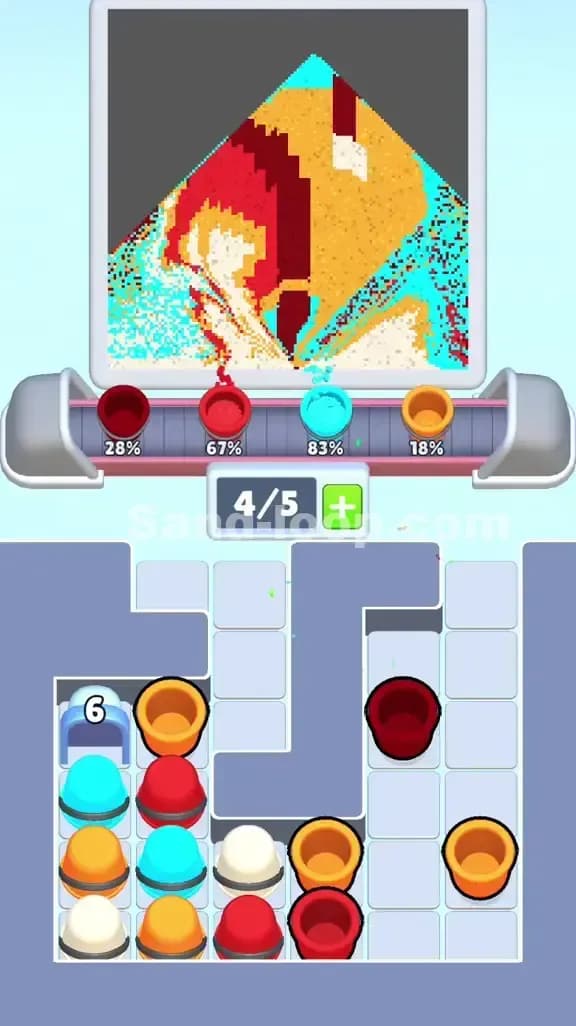
As you tap these cups, watch the number on the Ice Block tick down: 6... 5... 4...
2. The Envelope Sequence
Once the counter hits 0, the Ice Block shatters. Now you have access to the left column (Cyan/Orange/White). This is the critical phase.
- You are now building the middle section of the image. The target shows white rectangles inside the yellow mass.
- Don't spam Orange. It is tempting to just unload all the yellow cups to finish the box. Stop.
- Look for White cups. You need to drop a White cup, then an Orange cup, then another White cup. This alternating rhythm prevents the colors from mixing into a solid blob. It keeps the "stripes" of the envelopes distinct.
3. Placing the Red Flag
As you near the top of the mailbox shape, you need to place the Red Flag.
- This detail is high up on the canvas. Do not play your final Red cup too early. If you play it while filling the bottom half, it will get buried.
- Wait until the mailbox body is about 70% full. Then, drop the Red cup. It will settle on the top right of the mound, forming the flag perfectly.
4. Filling the Cyan Sky
The background is your clean-up phase.
- You likely have several Cyan cups remaining, mostly from the stack that was under the Ice Block.
- Once the mailbox is defined and the flag is placed, you can rapidly tap out the remaining Cyan cups.
- Tip: Be careful not to leave a single empty slot at the very top corners. If you have a "Splitter" cup (one that pours two streams), save it for the very end to ensure the sand reaches both top corners of the sky evenly.
5. Managing the "Loop" Cups
You will notice cups with Red/Orange arrows (recycling symbols) on them. In this level, these cups act as Texture Blenders. They likely provide the textured, grainy look of the mailbox surface. Treat them as standard Orange cups for the sake of structure, but know that they add volume quickly. Use them to bulk up the center of the mailbox, but keep them away from the delicate white envelope lines if possible. Pure colors are better for detailed lines; textured cups are better for filling space.