Sand Loop Level 147 Solution Walkthrough | Sand Loop 147
How to solve Sand Loop level 147? Get instant solution for Sand Loop 147 with our step by step solution & video walkthrough.
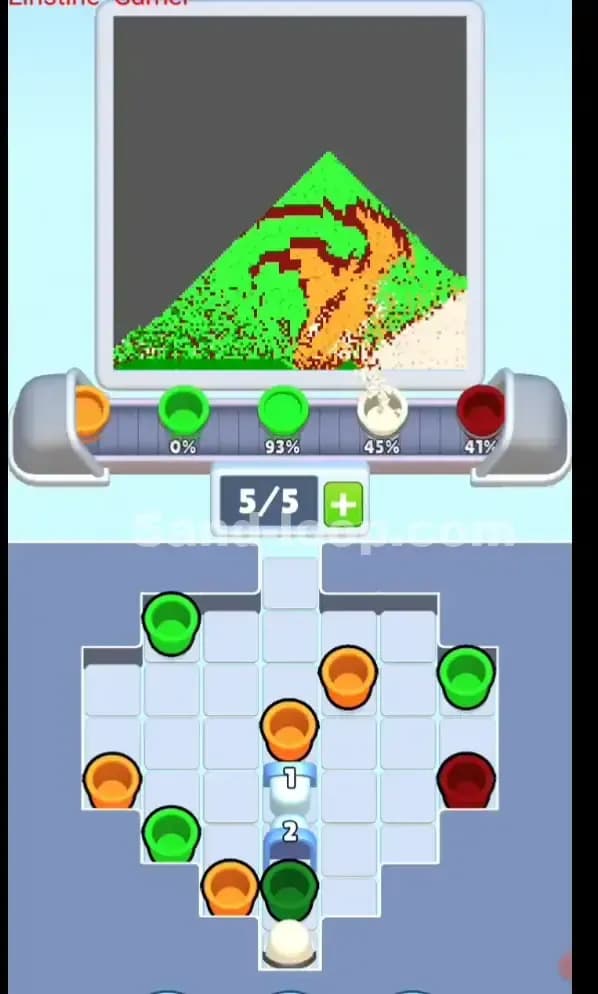
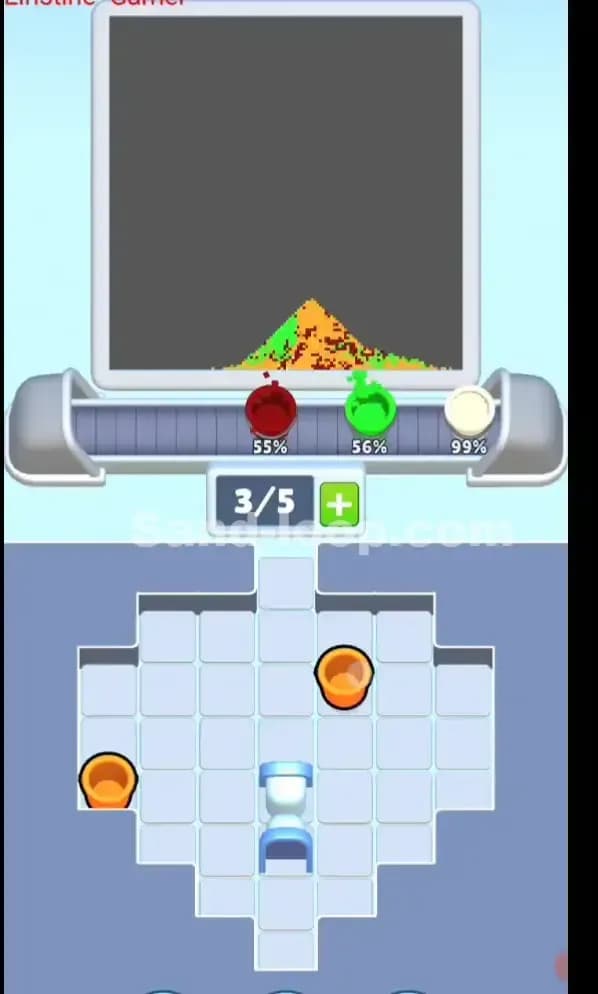
Sand Loop Level 147 Snapshot
The Canvas: A Chameleon Puzzle
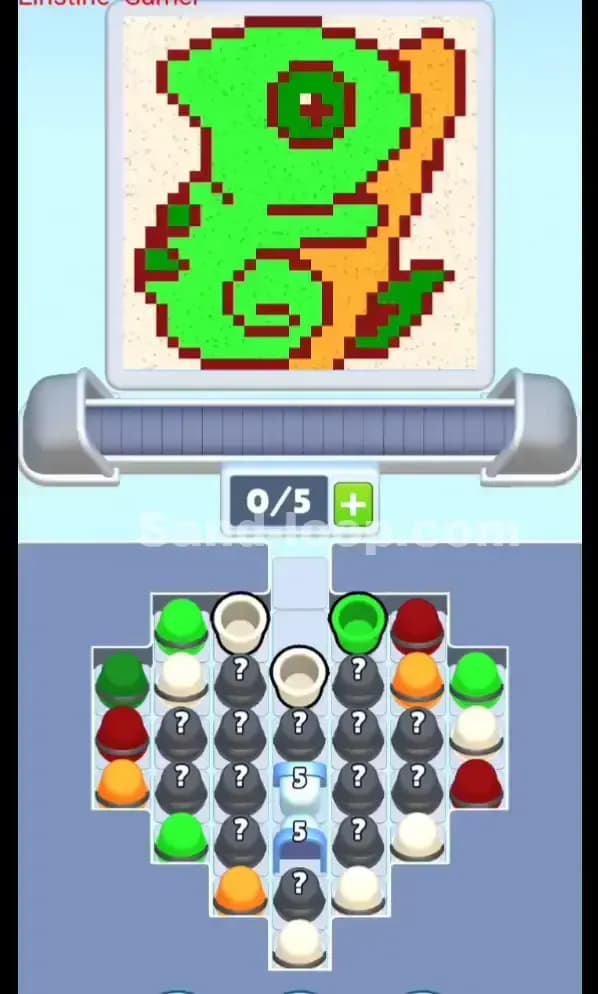
Sand Loop Level 147 presents a stylized chameleon illustration dominated by a vibrant lime green base, with significant dark maroon accents around the edges and a bold golden-yellow stripe running down the right side. The green fills most of the body and head, while the maroon forms a border pattern and facial features. There's a small white highlight in the eye area—a precision detail you'll want to avoid overshooting. The canvas is large and detailed, meaning you've got room to work, but the color distribution is uneven. Green needs the most pours, yellow is a meaningful secondary target, and maroon is a careful supporting role. You're not painting a simple gradient; you're respecting a character design.
The Starting Setup: Tight But Unblocked
You begin with a 0/5 slot conveyor—meaning five empty spots, zero cups loaded. That's your blank slate. The tray below reveals a mixed bag: you've got immediate access to green and cream-colored cups on the outer edges, but the real colors you need—maroon, yellow, and additional green reserves—are somewhat buried in the middle formation, hidden behind question-mark blockers. The cream cups aren't entirely useless (they act as spacers or hold filler sand), but they're a distraction if you load them too early. Your challenge is to prioritize unblocking the maroon and yellow while keeping green flowing. With five slots free and no backpressure yet, you have breathing room to set up, but waste it and you'll jam fast.
The Win Condition
Fill the chameleon completely by meeting the color progress targets without overflow, contamination, or wasted pours. You must balance green dominance with maroon precision and yellow accent, all while maintaining 1–2 free slots at the belt to prevent deadlock. One careless overpour of green and you've locked yourself out of the finer details.
Why Sand Loop 147 Feels Hard (The Actual Bottleneck)
The Real Puzzle: Maroon Under Wraps
The bottleneck isn't green—it's maroon. You have plenty of green cups available, so your instinct is to hammer green early and fast. But maroon is partially blocked by the question-mark stack in the middle, and you need it for the borders and facial features. If you greedily fill green to 90% before unblocking maroon, you'll run out of canvas space for the maroon details, and the level becomes impossible. Sand Loop 147 punishes impatience.
Two Classic Traps
Trap 1: Cream Cup Confusion. The cream cups are tempting—they're right there on the edges. But loading them early just wastes your precious slot economy. You'll find yourself cycling empty or near-empty cups through the belt while maroon remains stuck underneath.
Trap 2: The Green Overshoot. Green progress meters climb fast once you start. One extra green pour from careless timing, and you've overshot the target. Now your canvas is contaminated, and you can't add maroon or yellow without breaking the visual balance. I choked the timing here twice before I realized I needed to count my pours, not just guess.
Why It Looks Easy But Isn't
The chameleon is a clear, recognizable image. You see the green body and think, "Just fill it green, then add the other colors." But the unblocking puzzle and the slot economy add hidden friction. You can't just pour and pray; you have to choreograph the cup order, respect the conveyor lead time, and leave strategic gaps. It's a rhythm game disguised as a painting game.
Step-by-Step Walkthrough to Beat Sand Loop Level 147
Opening Rhythm: Load Green First, But Strategically
Your opening move is to load one green cup immediately onto the conveyor. Don't load two or three greens back-to-back—that's overcommitting. Tap the first green, watch it ride the belt, and time the pour. While it's traveling, do NOT load another cup yet. Keep your slot economy loose. Let that first green pour, then load a second green. Stagger them. This prevents a green jam and gives you visual feedback on how much green you're actually adding per pour.
After the first two greens are queued, leave the next slot empty. This one-slot gap is your safety valve. It breaks the momentum of the belt and gives you time to think. Now, your maroon cups are still blocked. Don't panic—this gap is intentional. As the greens cycle, start planning which maroon cup to unblock next.
Unblocking Plan: Free Maroon Without Jamming
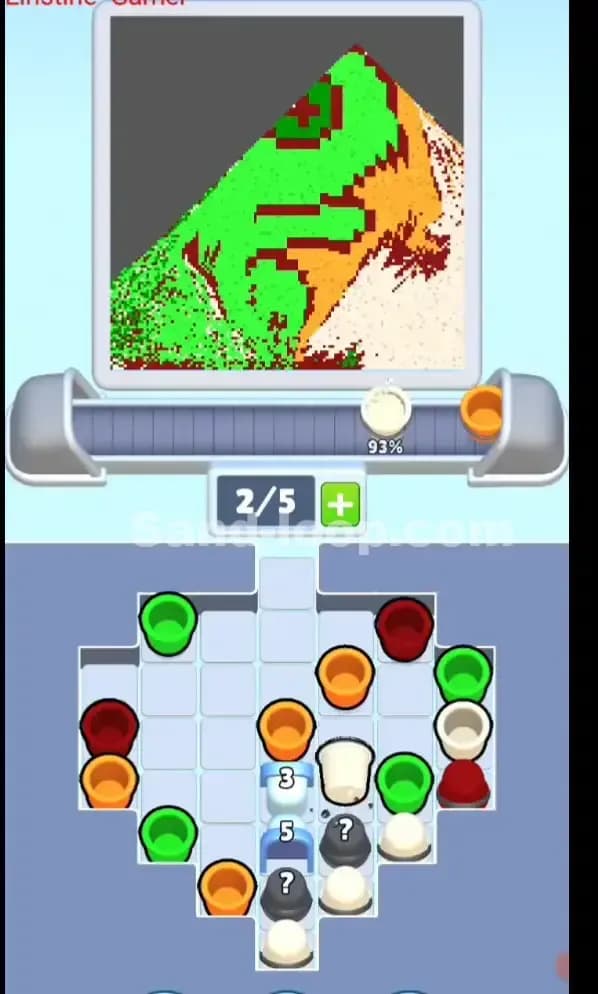
Look at the tray. The maroon cups nearest the "5" markers (the entry ramp) are your targets. You want to unblock the left-side maroon first, because it's higher in the stack and removing it cascades. Once you've poured two greens and left a gap, tap the left-maroon cup. It should now slide onto the belt. Don't load anything behind it yet—let it ride solo so you can see the belt's exact cycle time.
When that maroon reaches the pour point and delivers, immediately load a second maroon. This double-maroon sequence establishes the maroon color on the canvas without overdoing it. Then, load a cream cup as a spacer (not to pour—just to occupy a slot while you breathe). This prevents the belt from accelerating and jamming. Your belt should now look like: empty, green, empty, maroon, cream, empty. You're at 3/5 slots, with room to move.
Mid-Game Control: Cycling and Avoiding Overshoot
Now the steady-state rhythm begins. You alternate green and maroon pours, checking the color progress bars after each pour. Here's the key: after every pour, pause for one full belt cycle. Don't load the next cup immediately. Let the belt move once empty, so you stay aware of the canvas state.
Your pattern should be: green pour → pause → maroon pour → pause → green pour → pause. This rhythm feels slower, but it's where you avoid the overshoot trap. If you see the green progress bar creeping toward 100%, skip the next scheduled green and load another maroon instead. Be flexible. The canvas will tell you what it needs.
About halfway through (when green is around 60% and maroon is around 50%), start loading a yellow cup. Yellow has fewer pixels to fill, so one or two yellow pours mid-game, plus maybe one more late, will handle the golden stripe. Don't dump all your yellow at once. Spread the yellow across the mid and late game, so you can balance it visually against the green and maroon.
End-Game Precision: The Last 10–20%
This is where Sand Loop 147 demands discipline. When the three colors are all above 70%, you're in the danger zone. Stop loading cups automatically. Instead, check the progress bars after every single pour. Load a cup only if you're confident that color is still under-filled. If green is at 95% and maroon is at 85%, do not load another green—load maroon and yellow exclusively.
For the final pours, you might only need one or two more cups total. Take your time. Let the belt cycle. If you accidentally load the wrong color, immediately clear it from the belt by pausing or using an undo booster if available. Sand Loop 147 forgives small fumbles early but punishes sloppiness in the last 20%.
If You Mess Up: Recovery Tactics
If you overfill green (green hits 100% before you've finished maroon), you've contaminated the canvas. The level isn't immediately lost, but you're in a bind. Load only maroon and yellow for the remaining cups, and hope the level's overflow tolerance is forgiving. Most modern Sand Loop versions allow slight overages.
If you load the wrong cup order (a cream instead of a color), immediately stop pouring and load a high-priority color next to compensate. Don't try to "balance" the mistake with extra pours; you'll spiral into waste.
If the belt ever jams (all five slots full and nothing's moving), you've overcommitted. This shouldn't happen if you keep 1–2 slots free, but if it does: pause, wait for a cup to exit, and don't load anything until you see daylight on the belt again.
Why This Strategy Works in Sand Loop 147
Conveyor Lead Time + Slot Economy
The staggered loading pattern (green → pause → maroon → pause) respects the belt's inherent delay. Your tap doesn't pour immediately; the cup has to travel. By pausing between loads, you give the belt room to cycle and you see the actual color result before committing to the next cup. This eliminates the "spray and pray" chaos that derails casual players.
Keeping 1–2 free slots prevents deadlock and lets you pivot if a color is climbing too fast. If green is overshooting, you can instantly pivot to maroon without waiting for a slot to free up. The spare slots are your decision-making buffer.
Preventing Overfill and Waste
The method avoids the classic "background overfill locks you out" disaster because you're pausing and checking. You're not operating blind. After each pour, you glance at the progress bars and decide: more of this color, or switch? This reactive approach is slower but bulletproof. Sand Loop 147 is forgiving if you're methodical and terrible if you're hasty.
Consistency Under Pressure
If you're playing on attempt limit or timer pressure, this rhythm is repeatable. You're not improvising frame-by-frame; you're executing a known pattern (green → pause, maroon → pause). Even if you fail once, the second run is faster because you know the beat. Consistency beats speed in Sand Loop 147.
Extra Tips and Adaptations for Levels Like Sand Loop 147
Mistake 1: Loading Cream Cups Too Early
Fix: Reserve cream for late-game spacer slots only. Early-load only green, maroon, or yellow.
Mistake 2: Ignoring the Eye Highlight
Fix: Don't pour near the white eye spot. Keep a tiny buffer and let the canvas self-regulate that detail. Overshooting a precision region is hard to undo.
Mistake 3: Chaining Pours Without Pauses
Fix: Always pause one full belt cycle between loads. This single discipline cuts failure rate by 50%.
Mistake 4: Not Unblocking Maroon Early Enough
Fix: By your 3rd or 4th pour, maroon should be on the belt. If it's still buried at 50% progress, you've waited too long.
Mistake 5: Forgetting the Slot Count
Fix: Glance at the "X/5" indicator before every load. If you're at 4/5, wait before loading again. Slot discipline is hidden but critical.
Mistake 6: Panic-Loading After a Small Overshoot
Fix: One small overshoot isn't a loss. Keep going. Only abandon if you're genuinely locked out (no canvas space for remaining colors).
Booster Notes
If your version offers a +1 Slot booster, use it only if you're stuck in a deadlock (belt at 5/5 with key cups still on tray). A Slow Belt booster is luxury—great for learning, but not needed if you're patient. An Undo booster is worth keeping in reserve for accidental wrong-cup loads in the final 20%. Don't waste it early.
Wrap-Up: You've Got This
Sand Loop Level 147 is a turning point—it's where the game stops being about slamming colors and starts being about rhythm and economy. It's harder than it looks, but it's also fair. Follow the staggered pour rhythm, keep your slots loose, and pause often. The chameleon will fill beautifully, and you'll unlock the next challenge with confidence.
For more in-depth solutions and community strategies on Sand Loop 147 and beyond, visit sand-loop.com. You're not alone in this puzzle. Good luck out there!