Sand Loop Level 32 Solution Walkthrough | Sand Loop 32
How to solve Sand Loop level 32? Get instant solution for Sand Loop 32 with our step by step solution & video walkthrough.
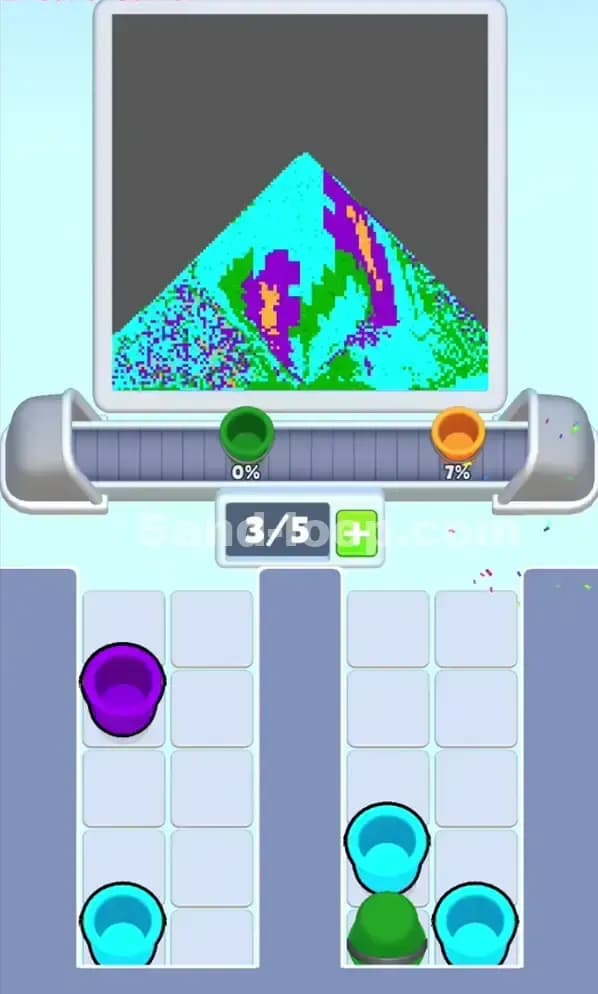

Sand Loop Level 32 Snapshot
The Canvas and Color Goal
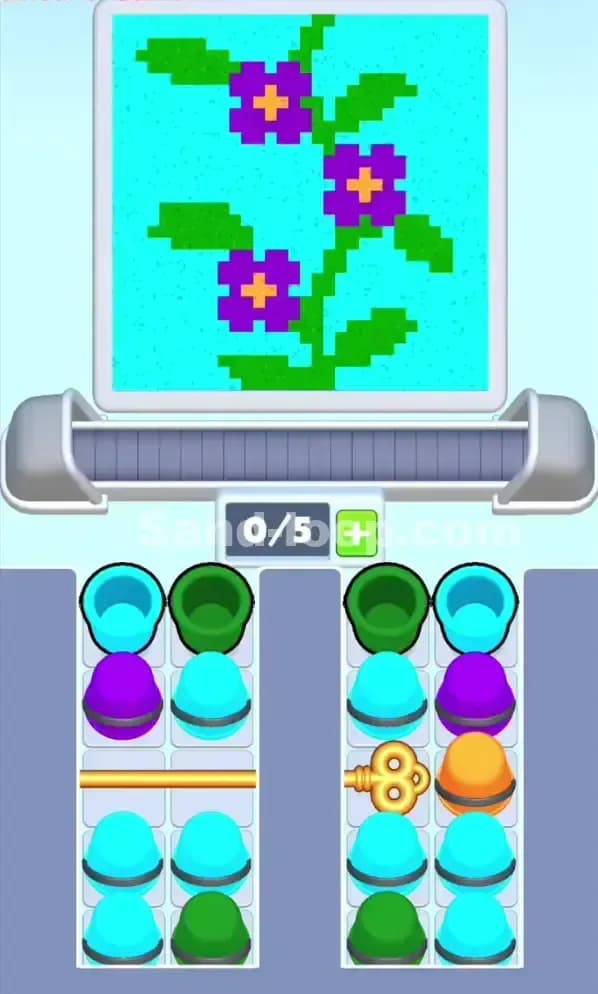
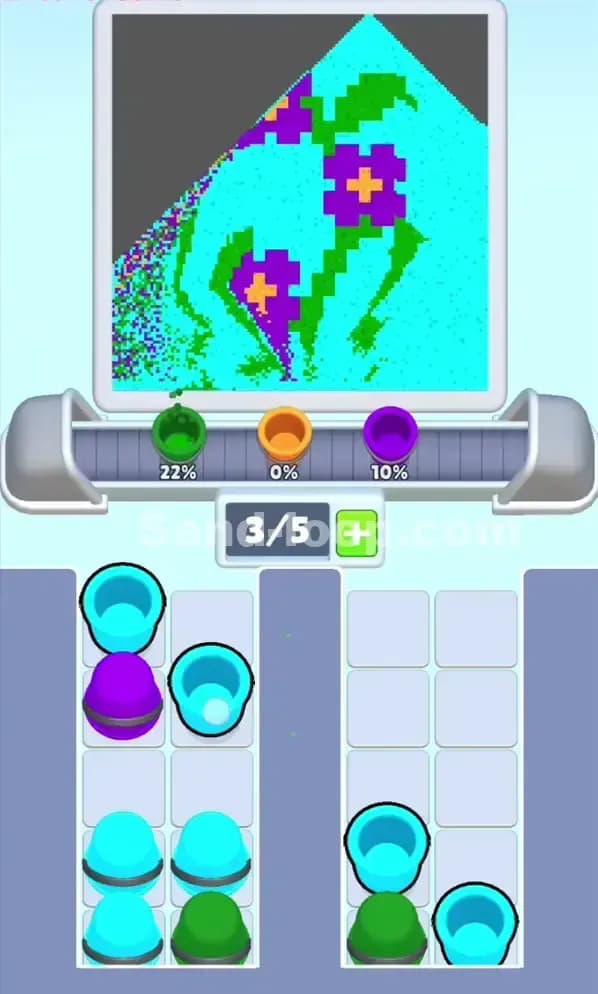
Sand Loop Level 32 presents a bright cyan background scattered with three purple flower clusters (each with a golden center), surrounded by green leaf shapes. Your job is to fill this picture by matching the color requirements shown in the progress meters. The cyan background dominates the space, but those purple blooms and green leaves are the precision targets—they're small, distinct regions that demand careful color control. You'll need to balance heavy cyan pours with exact bursts of purple and green without overshooting any single color.
Your Starting Setup
You're starting with a conveyor capacity of 0/5, meaning your belt is empty and ready to load. The supply tray below shows a mixed arrangement: cyan cups (plural, stacked and available), green cups (some accessible, others blocked deeper in the stack), purple cups (similarly mixed), and an orange cup hiding near the bottom right. The key insight? Your most accessible cups right now are cyan and the immediate green/purple options, but you'll need to strategically unblock the buried colors as the level progresses. The puzzle isn't just about pouring—it's about which cups you load and in what order.
Win Condition
Fill the canvas to completion by meeting all three color targets (cyan, purple, and green) without wasting pours or accidentally overflowing one color while waiting for another to unblock. Sand Loop 32 punishes sloppy timing and poor slot management, so every cup you load and every gap you leave matters.
Why Sand Loop 32 Feels Hard (The Actual Bottleneck)
The Real Problem: Buried Green and Purple
Sand Loop Level 32's biggest trap is that your most critical precision colors—green and purple—are partially buried or blocked in the supply tray. You can't just grab them whenever you need them. The green cups are stacked behind or below other pieces, and the purple ones are similarly constrained. Meanwhile, cyan is everywhere and easy to load. The temptation is to pour cyan early and often, but if you overfill cyan before you've unblocked enough green and purple, you'll lock yourself out. You'll have slots filled with cyan cups you don't need, and no room to load the colors you actually require.
Common Traps
Trap One: Cyan Overpour. Cyan is so accessible that most players load 3–4 cyan cups in their first pass. By the time the third cyan cup reaches the pour point, you've already filled 60% of the background and realize you should've been stacking green cups instead. Now you're stuck waiting for buried pieces to clear.
Trap Two: Slot Deadlock. With 0/5 starting capacity, you need to be ruthless about keeping 1–2 slots perpetually empty. Load a cup, let it ride, then load the next only after the previous one has hit the pour point. If you fill all five slots with the "wrong" colors stacked in order, the belt locks up and you can't access the shapes you need.
Trap Three: Purple Precision Panic. The three purple flowers are small and precise. They demand exact pours—not too much, not too little. Many players rush the purple pours to "get it over with," overshooting in the final stretch and wasting attempts.
Why It Looks Easy But Isn't
I choked Sand Loop 32 on my first two runs because I underestimated the setup constraints. The picture looks straightforward—just match the colors, right? But the moment I loaded four cyan cups in a row and watched the background fill while green was still locked two pieces deep in the tray, I realized this level is all about foresight and restraint. It's a rhythm game disguised as a color-matching puzzle.
Step-by-Step Walkthrough to Beat Sand Loop 32
Opening Rhythm: First 30 Seconds
Start by loading exactly one cyan cup. Tap it now; it'll reach the pour point a moment later. Don't load a second cyan immediately. Instead, wait and watch that first cup travel. The reason? You need to understand the delay between your tap and the actual pour so you can time the next colors. Once the first cyan pours, load one green cup next. This accomplishes two things: it fills a small portion of green (feeding the meter) and it tells you which green cup is accessible without jamming the stack.
Keep one slot free throughout. Your belt has five slots, so load a cup, let it pour, then load the next. Never fill all five at once, or you'll watch helplessly as the wrong colors sit stuck on the belt while you need something else.
Unblocking Plan: Freeing Green and Purple
By the time your first cyan and green cups have poured, you'll see which pieces in the tray are now accessible. Cyan is abundant—don't waste slots on more cyan for now. Instead, load a second green cup if it's unblocked. If it's still buried, load a purple cup instead. The goal is to rotate through the colors and gradually expose deeper pieces. Each time a cup leaves the tray, the stack shifts, and new options open up. Patience here pays dividends; don't force a stuck piece or you'll clog your slots.
After your first 4–5 pours, you should have a sense of which green and purple cups are coming next. Plan for them. Leave that crucial empty slot so when a green cup finally clears the pile, you can immediately load it without waiting for another pour to cycle through.
Mid-Game Control: The Balancing Act (Pours 6–15)
Now you're cooking. The conveyor is running; cups are cycling. Your strategy shifts to maintaining a 2:2:1 ratio of cyan-to-green-to-purple pours as you go. This is approximate—adjust based on your color meter—but the idea is clear: don't binge one color. Load cyan, then green, then purple, then repeat, with occasional empty gaps to prevent deadlocks.
Watch the color progress indicators constantly. If cyan is at 80% and green is at 40%, you're pouring too much cyan; shift to more green and purple. If purple is rising slowly, it's because those cups are still blocked—load one as soon as it clears. The belt should feel like a rhythm: load, pour, load, pour, with gaps built in for strategy.
Avoid continuous pouring. Some players hold the pour button and let it run—huge mistake. That guarantees overfills. Instead, tap once, watch the meter, tap again when you're ready for the next cup. It's slower, but it's safe.
End-Game Precision: Final 15%
When you're down to the last 10–20% of the canvas, your slot discipline becomes critical. You likely have one or two colors that are nearly complete, and one that's lagging. Stop loading the near-complete colors. Load only the color that needs filling. Better yet, calculate your remaining pours: if purple needs three more hits and you have three purple cups queued, let them pour in sequence without interference. Keep the belt moving, but don't load extra cyan or green—those slots are wasted.
The last flower or leaf should arrive as a clean, single pour with no overshoot. If you've managed your slots and colors correctly, the final cup will hit the pour point, top off the last meter, and boom—level complete.
If You Mess Up: Quick Recovery
You've loaded three cyan cups in a row and the background just hit 90% while purple is stuck at 40%. Don't panic; you're not doomed yet. Look at the tray: is purple now accessible? If yes, load it immediately and let the three cyan cups finish their journey. Cyan will overfill slightly, but if you stop loading cyan now and switch entirely to purple, you can still win. The overfill usually doesn't break the level—it's only wasted when you lock yourself out of accessing the remaining color.
If a cup jambs or you accidentally load the wrong color, use the undo/swap booster if available. Sand Loop 32 is brutal enough that spending a booster to undo one bad load is worthier than burning three more attempts.
Why This Strategy Works in Sand Loop 32
Conveyor Lead Time + Slot Discipline
The core of this strategy is understanding that your tap now affects the pour point 3–4 seconds (game-time) later. By loading a cup, then waiting, then loading the next, you're not actually slowing down—you're staying in sync with the belt. When you load five cups at once, they all pile up in sequence, and by the time you realize cup three is the wrong color, it's already locked in place. This walkthrough staggers loads so you can react to each color's meter and course-correct before the next cup pours.
Controlling Waste and Preventing Background Overfill
Cyan is tempting because it's accessible and fills space fast. But Sand Loop 32's canvas is mostly cyan background, which means a few heavy cyan pours fill it quickly, starving your green and purple targets. By rationing cyan and front-loading green/purple unblocking, you ensure all three colors progress evenly. You avoid the classic trap: filling cyan to 100% while green is at 50%, then being unable to load more cyan and stuck waiting for purple to crawl to completion.
Slot Economy Keeps the Level Consistent
With only 5 slots and a complex tray layout, keeping 1–2 slots free is the difference between smooth cycling and frustrating deadlock. This strategy treats empty slots as a resource, not a waste. Every empty slot is an insurance policy against bad stacks and surprise color needs. Players who fill all five slots and then discover they need a color that's two pieces deep in the tray quickly learn this lesson the hard way. You won't—you'll be one step ahead.
Extra Tips and Adaptations for Levels Like Sand Loop 32
Six Common Mistakes and Fixes
-
"I'll load all the cyan now and purple later." Fix: Alternate colors from the start. The belt is fastest when you're loading different colors in sequence; it prevents jams and keeps pressure on all three meters equally.
-
"Purple is hard to unblock, so I'll ignore it until the end." Fix: Load a purple cup as soon as it clears, even if purple's meter looks healthy. Pushing purple early means fewer surprises late and less stress when you're down to the final pours.
-
"I'll fill all five slots and multitask." Fix: Never do this. Load, pour, load, pour. One cup at a time. It's slower, but it's safer and actually faster overall because you avoid deadlocks.
-
"I can eyeball when the cup reaches the pour point." Fix: Watch the first few cycles closely to internalize the delay. Once you feel the rhythm, you'll time it by instinct. Don't rely on visual guessing—that's where timing errors creep in.
-
"I overflowed cyan by accident; I'm doomed." Fix: Overfill rarely breaks the level. Stop loading cyan, load the color that's lagging, and finish. A slight cyan overspill is a small price for completing the level.
-
"The orange cup at the bottom—is that a trap?" Fix: Ignore it unless a booster explicitly requires it. It's not part of the winning color set for Sand Loop 32. Don't waste a slot unblocking it.
Boosters and When to Use Them
If your version includes an Extra Slot booster, use it before your first load if you're nervous about deadlocks. Six slots instead of five gives you breathing room and a safety net. It's worth the cost on Sand Loop 32 because the tray constraint is so tight.
A Slow Belt booster is tempting but unnecessary here—this level isn't about speed, it's about order. Skip it.
An Undo or Swap booster is golden. If you've loaded the wrong cup and realized it too late, burn one to undo and reload. It's far cheaper than restarting the entire level.
Final Encouragement
Sand Loop 32 is a milestone level that teaches you how resource management and timing work together. Once you beat it, you've cracked the code for dozens of harder stages. The trick isn't being perfect—it's being deliberate. Load one cup at a time, watch the meters, unblock colors methodically, and trust the rhythm. You've got this.
For more detailed strategies and community solutions, visit sand-loop.com and search "Sand Loop 32" to see how other players adapted this approach to their own runs. Good luck out there!