Sand Loop Level 65 Solution Walkthrough | Sand Loop 65

How to solve Sand Loop level 65? Get instant solution for Sand Loop 65 with our step by step solution & video walkthrough.
Share Sand Loop Level 65 Guide:
Sand Loop Level 65 Gameplay
Sand Loop Level 65 Solution 1
Sand Loop Level 65 Solution 2

Sand Loop Level 65 Snapshot

The Canvas & Color Goals

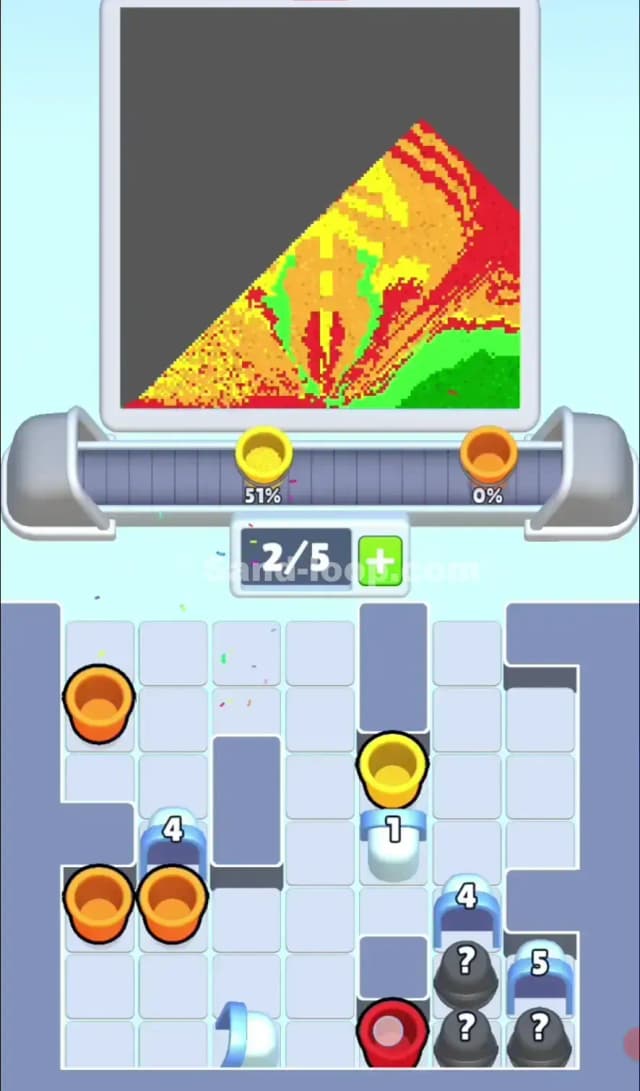
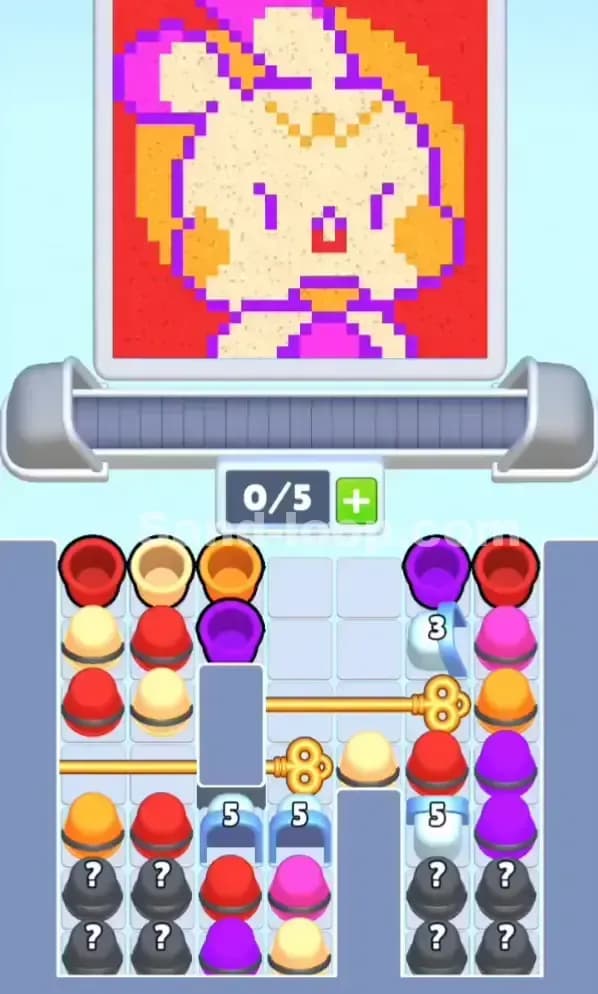
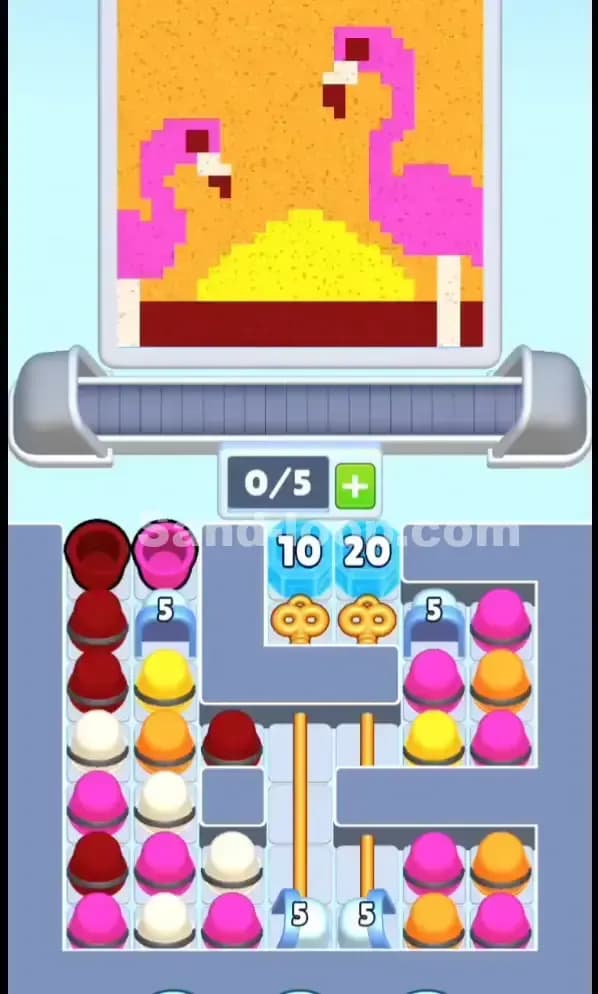
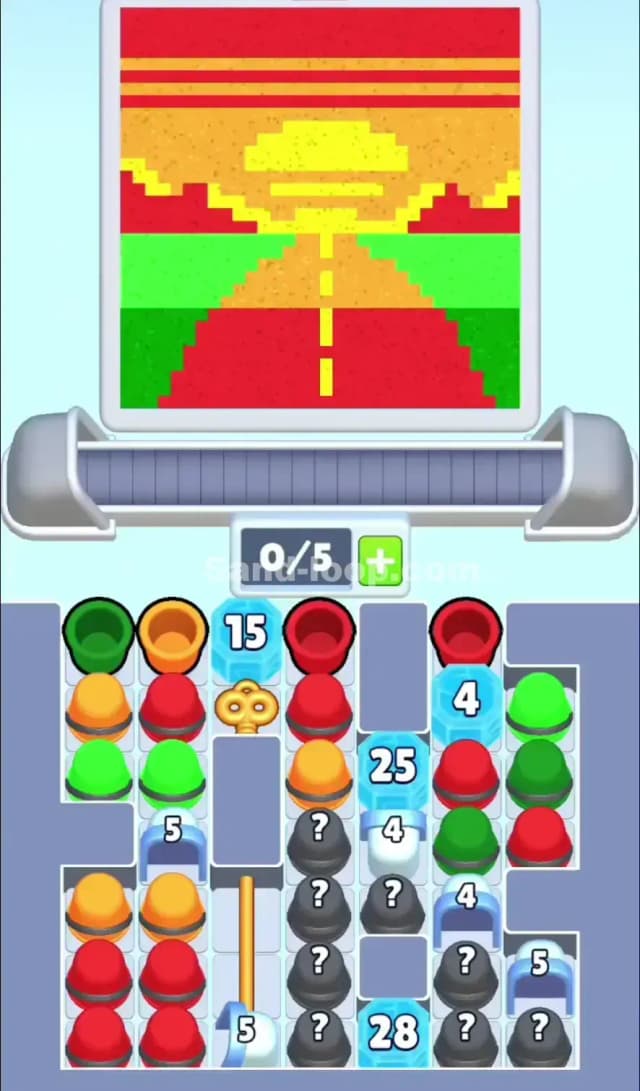
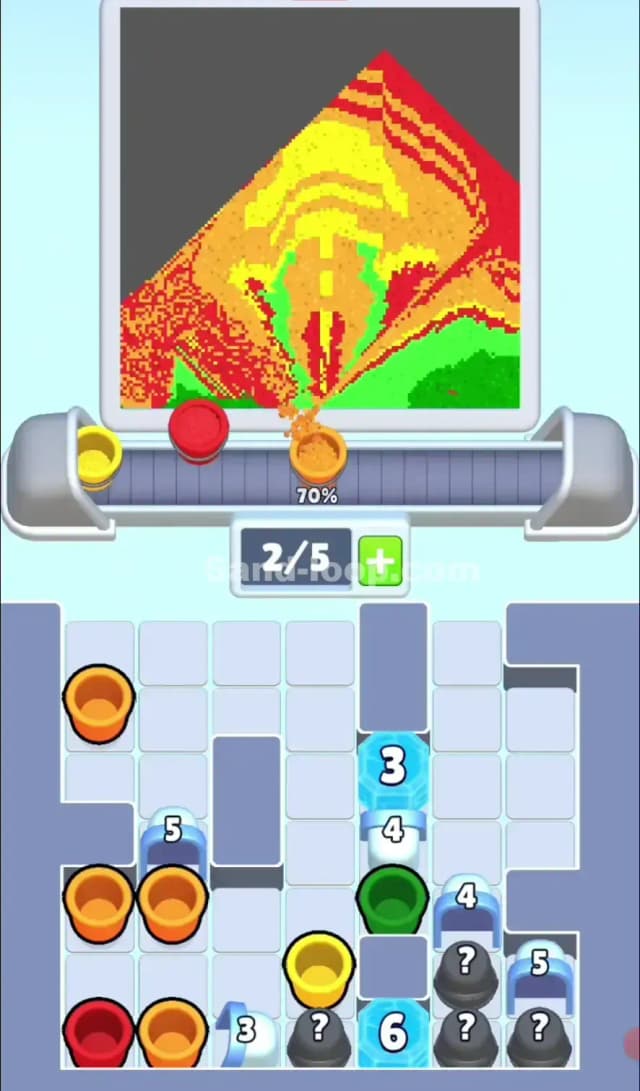
Sand Loop Level 65 presents a vibrant, multi-stripe composition with distinct color zones you need to fill strategically. The canvas features a dominant red section at the top, horizontal bands of yellow and orange in the middle, bright lime green regions flanking the sides, and a dark green base. There's also a striking yellow accent shape woven through the center. Your color progress meters show that you're juggling at least four primary colors—red, yellow, green (both bright and dark variants)—and orange. The challenge isn't just pouring sand; it's hitting each color target without overshooting one color and locking yourself out of finishing the others.

Starting Setup

You're beginning Sand Loop 65 with a conveyor capacity of 0/5 slots available, meaning your belt is currently empty and ready to receive cups. Looking at the supply tray below, you've got immediate access to green, orange, and red cups stacked in the left columns. However, there are several blocked cups buried deeper—notably more reds, greens, and critical support colors trapped beneath move tokens and locked slots. The tray layout shows that some cups are numbered (indicating move requirements or blocking mechanics), and there are mystery cups (marked with "?") that you'll need to strategically clear to access better colors later.

Win Condition

Fill the entire canvas by meeting the precise color requirements for red, yellow, orange, and green zones without contaminating colors, causing overflow, or creating a slot jam that halts your progress. You must deliver each color in a controlled, planned sequence so that the picture completes without waste.


Why Sand Loop 65 Feels Hard (The Actual Bottleneck)

The Real Bottleneck: Slot Starvation + Buried Critical Colors

The biggest problem in Sand Loop 65 isn't the color count—it's that your conveyor can only hold 5 cups at once, and several key colors are buried behind move tokens and blocked slots in the tray. You can't just grab a red cup and start pouring; you're forced to clear blocking cups first, which consumes moves and slots. Meanwhile, your color meters are climbing unevenly, and if you load too many of one color early, you'll overfill it before you've freed up the colors you actually need.

Three Major Traps

Trap 1: Overfilling Red Too Early. Red dominates the canvas, but if you feed the red dispenser continuously in the opening, you'll max out the red meter before yellow, green, and orange are anywhere close to done. You'll waste moves and precious slot space on a color you've already satisfied.

Trap 2: Not Unblocking Orange & Yellow In Time. Orange and yellow are critical accent colors in the middle of the canvas, but they're not immediately accessible in the tray. If you ignore the blocking cups and keep cycling red and green, you'll reach a point where you have to pour orange or yellow to progress, but the dispenser cups are still trapped under move tokens. You'll burn attempts trying to find a workaround.

Trap 3: Slot Deadlock from Greed. It's tempting to load the belt with five cups at once to "maximize efficiency," but if all five are the same color or if they jam the flow, your belt stalls. You lose momentum and may run out of moves before the level resets. Keeping 1–2 empty slots allows you to respond quickly to color changes.

Why It Looks Easy But Isn't

I choked the timing here twice because the canvas looks straightforward—just fill the regions with their colors. But Sand Loop 65 is really a puzzle about supply chains and constraint management. You're not just matching colors; you're orchestrating which cups reach the dispenser and when, while fighting a tray full of obstacles. The rhythm feels off because you can't just pour continuously. You have to stop, unblock, wait, and carefully load the next batch. That cognitive friction is what catches most players.


Step-by-Step Walkthrough to Beat Sand Loop 65

Opening Rhythm: Establish a Balanced Start

Begin by loading green and red cups onto the belt in an alternating pattern. Don't load all five slots immediately; instead, place a green cup, then a red cup, then another green. This gives you a 2-2-1 mix of the most abundant colors and keeps one slot empty so you can react quickly. As the green cup passes the dispenser, tap the green pour. The delay between your tap and the cup reaching the nozzle means you're planning ahead—by the time the red cup arrives, you've already committed to that pour.

Why this order? Green and red together occupy about 60% of the canvas, so you're making steady progress on both fronts. By keeping pours moderate and spaced, you avoid shocking the meters and maintain flexibility. As these first cups cycle through, monitor your color progress. If green is climbing faster than red, load another red next time; if red is inching ahead, load more green. The goal is to keep your color progress within 10–15% of each other.

Unblocking Plan: Prioritize Orange & Yellow Access

Once your first 3–4 cups have cycled through and you're feeling rhythm in your pours, shift focus to unblocking orange and yellow from the tray. You'll notice that some cups are stacked on top of each other or under move tokens. Your next task is to clear the path to orange and yellow cups.

Look at the supply layout: identify which cups are directly blocking orange and yellow. Start by removing those blocking cups from the belt. Yes, this means you might load and pour a color you don't urgently need right now (like an extra red or the mystery cups), but it's a necessary investment. Each cup you clear opens up access to a new color on the belt.

Specifically, once orange and yellow are available, load them into the belt in a planned sequence. Don't pour them all at once; instead, slot them in at strategic points. For example: green, red, orange, red, yellow. This spreads your lesser-used colors throughout the cycle so you're continuously topping up their meters without overdoing any one pour. The goal is to have all four primary colors actively contributing by your 10th or 11th cup pour.

Mid-Game Control: Maintain Gaps & Avoid Continuous Pouring

Once you're 40–50% through the level, the canvas has started filling in, and your color meters are climbing. This is where precision becomes critical. Your conveyor is now a steady rhythm of cup cycles, but you must not slip into "auto-pilot pouring."

Here's the technique: as each cup approaches the dispenser, decide consciously whether to pour or skip. If red is at 70% and green is at 50%, skip the red cup when it arrives—let it cycle back to the tray without pouring. This creates a gap on the belt and prevents waste. Load the skipped red back into the supply stack so you can re-access it later if needed.

Why does this work? It breaks the monotony and gives you control over meter timing. You're not just reacting to cups arriving; you're choreographing which colors get priority. Maintain at least one empty slot on the belt at all times during mid-game, and use it to load fresh color combinations as you observe your progress.

End-Game Precision: The Last 10–20%

When you're in the final stretch—say, 80–90% complete—your color meters are nearly full, but one or two colors are still lagging. This is where patience pays off. Slow your pour rate deliberately. Load fewer cups per cycle, and be surgical about which colors you're pouring.

For example, if red and green are at 95% but yellow is at 60%, load only yellow cups for the next 2–3 cycles. Skip the red and green cups entirely. It's tempting to keep the belt "full," but a sparse, intentional belt is actually more powerful in the endgame. You're buying precision with simplicity.

As you reach the final 5%, watch your meters like a hawk. Many players rush the last pours and overflow one color, which blocks the others and fails the level. Instead, tap your pours with deliberate pauses between them. One pour, wait two seconds, observe the meter rise, then load the next cup. This rhythm ensures you stop pouring a color the moment it reaches 100%, not after.

If You Mess Up: Quick Recovery Tactics

If you accidentally pour red three times in a row and it's now at 105% (overflow), don't panic. You've likely still got moves left. Immediately shift all subsequent pours to the lagging colors (orange, yellow, green). The overflow in red is a sunk cost; your only path forward is to max out the other colors before your move limit runs out.

If you load the wrong cup order and a color you didn't intend reaches the dispenser, skip that pour (don't tap). The cup will cycle back into the tray, and you can reorder on the next pass. Skipping is free; wasting a pour is not.

If you jam your belt (all five slots filled with the same color and no progress), immediately empty the belt by pouring all five cups in rapid succession, even if it means overshooting that color slightly. A temporary overflow is better than a complete jam. Once the belt is clear, reload with a balanced, diverse mix.


Why This Strategy Works in Sand Loop 65

Conveyor Lead Time + Slot Economy

Sand Loop 65 demands that you account for the delay between tapping and the cup reaching the nozzle. By loading cups in advance and planning your pours one cycle ahead, you're essentially "pre-committing" to each color. This strategy prevents the chaotic scrambling of reacting to cups as they arrive.

The slot economy—keeping 1–2 spaces empty—solves the deadlock problem. A full belt with mismatched colors creates a traffic jam where you can't load new colors or skip old ones. By maintaining empty slots, you're buying optionality. You can load a surprise yellow cup or skip a red cup on short notice without cascading failures.

Avoiding the Background Overfill Lock

Many players fail Sand Loop 65 because they overfill the dominant color (red) early, thinking "more red = faster progress." But once red is at 100%, you cannot pour red anymore, yet red cups keep arriving on the belt. You're forced to skip them, which wastes belt cycles and eventually runs out of moves. This strategy prevents that by deliberately slowing red pours and balancing all colors. You reach 100% on all meters simultaneously or within a tight window, so there's no dead weight.

Consistency Across Attempts

If Sand Loop 65 has move or attempt limits in your version, this strategy is inherently repeatable. You're not relying on luck or fast reflexes; you're following a logical sequence of unblocking, loading, pouring, and pacing. Each attempt will feel similar, and small adjustments (load one more orange, skip one red) compound into success.


Extra Tips and Adaptations for Levels Like Sand Loop 65

Six Common Mistakes & Fixes

Mistake 1: Loading Five Cups at the Start. Fix: Start with three cups, observe the meter behavior, then gradually increase. You'll learn each color's "pour weight" (how much one cup fills) and adapt faster.

Mistake 2: Ignoring Mystery Cups (?). Fix: Mystery cups are often wildcards or move tokens. Don't waste energy on them early. Focus on named colors first, and treat mystery cups as secondary objectives for unblocking later.

Mistake 3: Continuous Pouring Without Pauses. Fix: Every third or fourth cup, deliberately skip a pour and let the belt cycle without dispensing. This resets your rhythm and gives you mental space to reassess.

Mistake 4: Not Monitoring One Color. Fix: Assign yourself one "watch color"—usually the rarest or hardest to fill (maybe yellow in Sand Loop 65). Track it obsessively. If it's lagging by more than 20%, dedicate the next two cycles to it exclusively.

Mistake 5: Panicking When One Color Maxes Early. Fix: It's okay if red reaches 100% before the others. Simply skip every red cup after that point and pour the others. You're not failing; you're just entering end-game mode early.

Mistake 6: Forgetting the Tray Layout. Fix: Before you start, spend 5 seconds studying the supply tray. Mentally note which colors are accessible now and which are buried. This single habit prevents "trapped color" surprises.

Boosters & When to Use Them

If your version of Sand Loop 65 includes boosters:

  • Extra Slot Booster: Use this in the mid-game (40–60%) if you feel like your belt is constantly full and you're missing color opportunities. One extra slot gives you breathing room to load balanced cup mixes.

  • Slow Belt Booster: Activate this near the endgame (80%+) if you're struggling with timing your final pours. A slower belt gives you more reaction time to skip or pour deliberately.

  • Undo / Swap Order Booster: Reserve this for genuine disasters—like accidentally loading five reds in a row and realizing it 2 seconds too late. One undo can save an attempt.

Don't use boosters preemptively. Play a few attempts with your base belt and see where you actually get stuck. Often, the strategy above eliminates the need for boosters entirely.


Close & Next Steps

Sand Loop Level 65 is a tough but fair level that rewards planning over reflexes. You've got this. The key is to treat it like a supply chain puzzle, not a reflex game. Load deliberately, unblock strategically, pour with intent, and keep your color meters in harmony. If you get stuck, revisit the mid-game control section and slow your rhythm—speed is the enemy here.

For more detailed strategies, puzzle guides, and community solutions for Sand Loop 65 and similar levels, visit sand-loop.com. Share your wins, learn from other players, and tackle the next challenge with confidence. Happy pouring!