Sand Loop Level 159 Solution Walkthrough | Sand Loop 159

How to solve Sand Loop level 159? Get instant solution for Sand Loop 159 with our step by step solution & video walkthrough.
Share Sand Loop Level 159 Guide:
Sand Loop Level 159 Gameplay
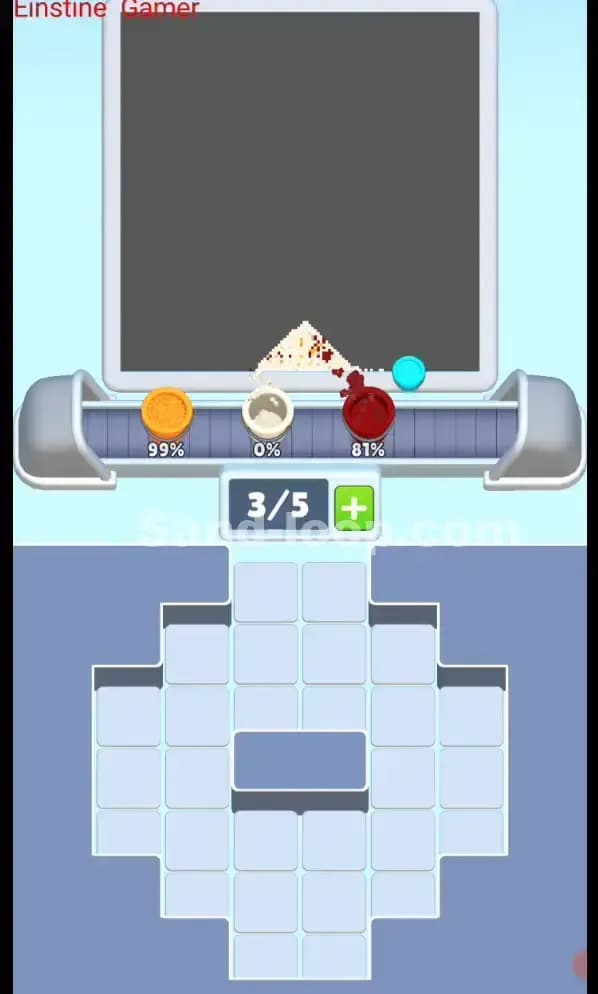
Sand Loop Level 159 Solution 1
Sand Loop Level 159 Solution 2
Sand Loop Level 159 Solution 3

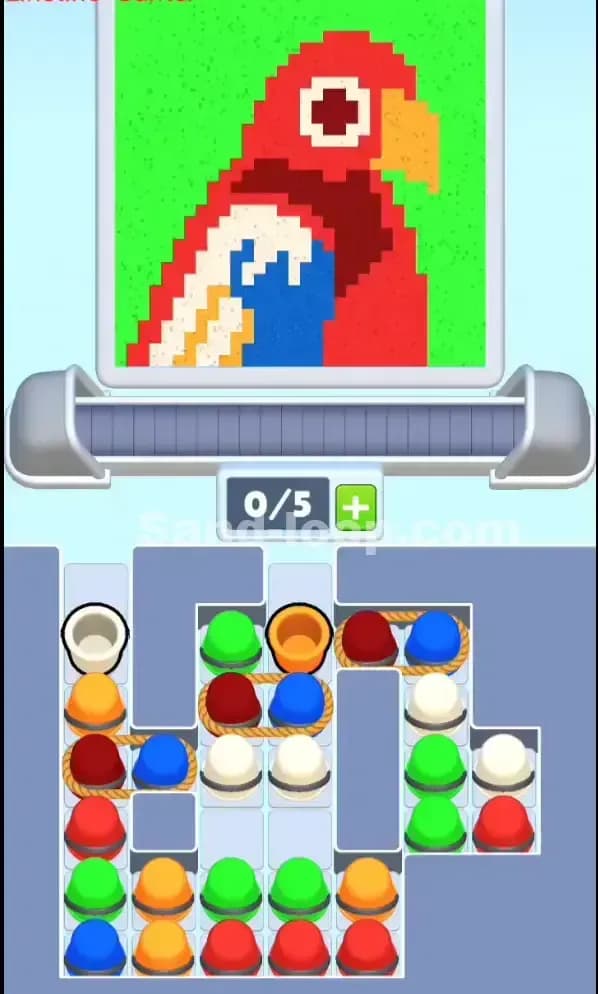
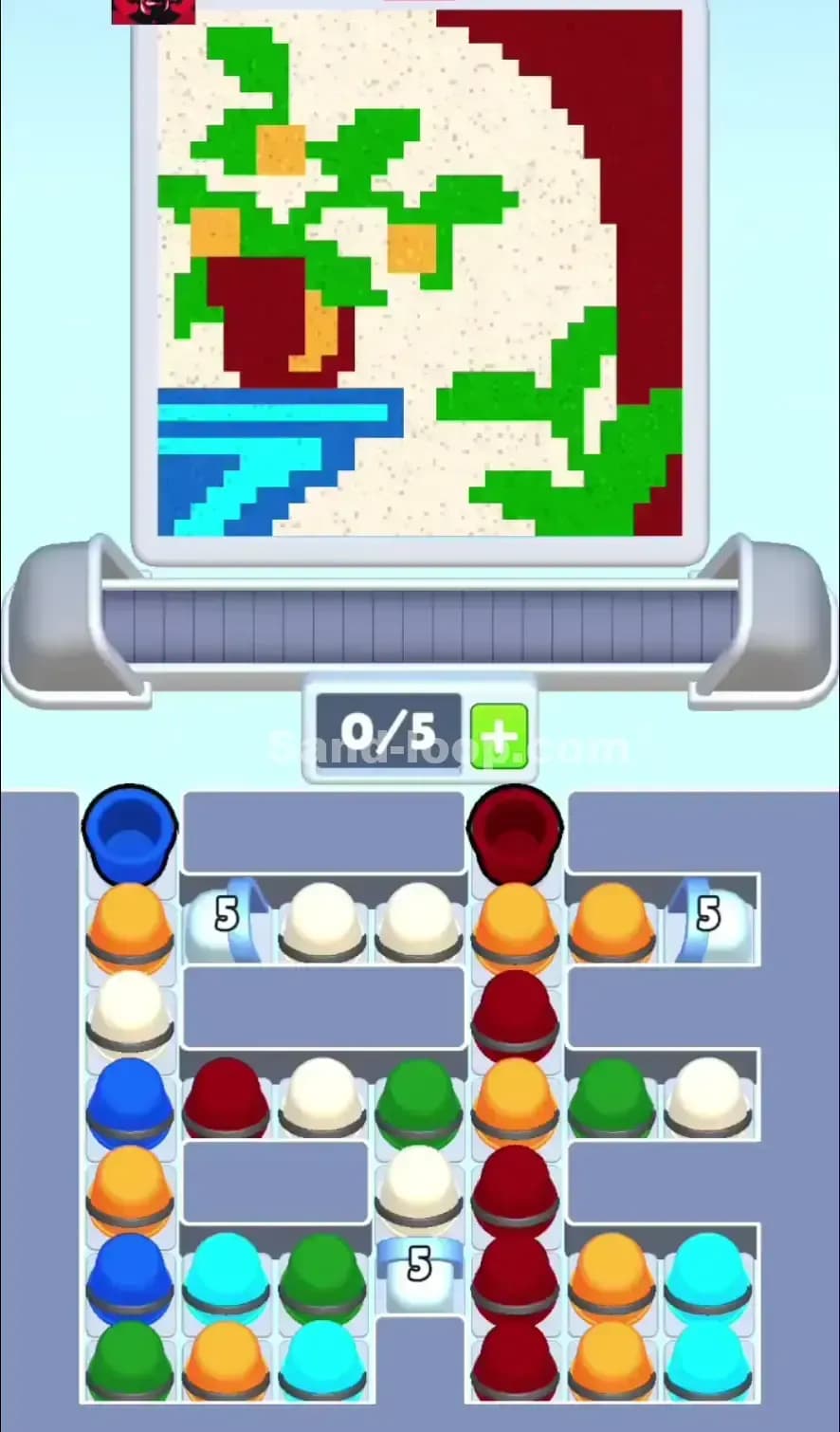
Sand Loop Level 159 Snapshot

The Canvas and Color Goals

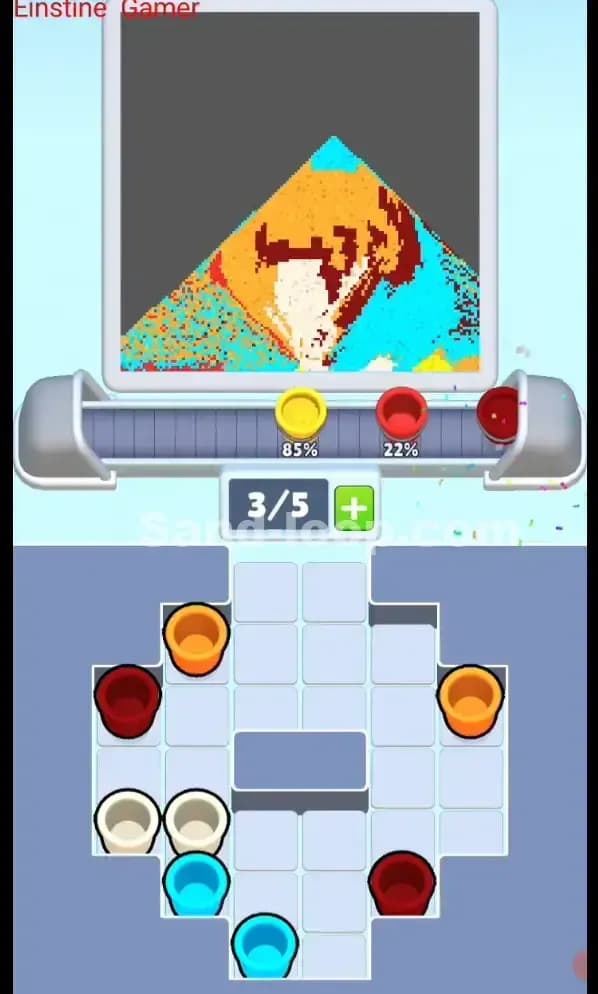
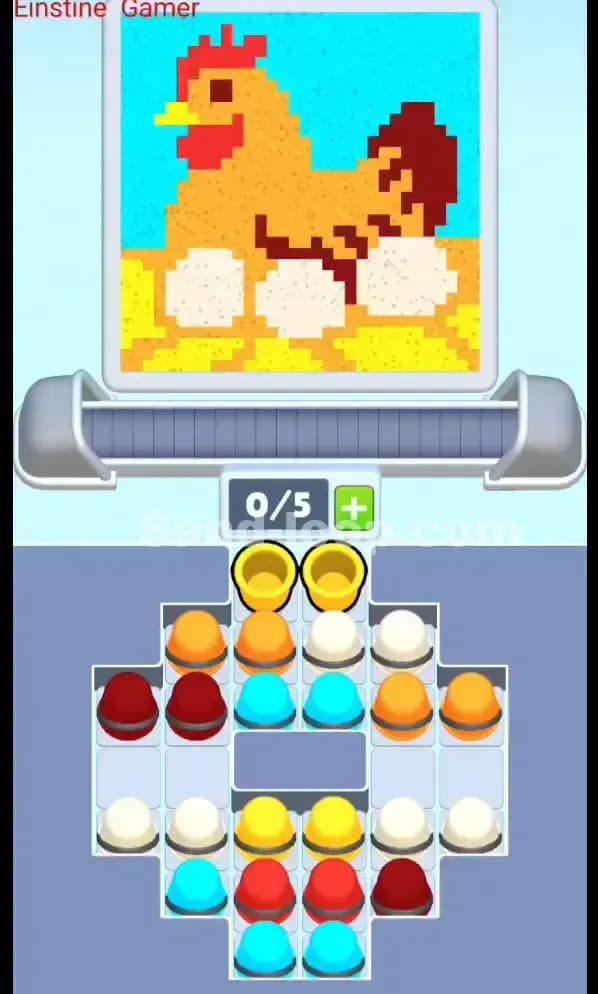
Sand Loop Level 159 drops you into a cheerful pixel-art rooster on a bright cyan sky and yellow ground. The rooster itself is packed with detail: golden-yellow body, dark red details on the tail and head, cream-colored feet, and a red mouth. This means you're juggling at least four major colors—yellow, red, dark red/maroon, cream/white, and cyan—plus managing the background. The color progress meters tell you exactly how much of each shade the level demands, and they're your constant reference point as you pour. That seemingly "simple" rooster image is actually a precision puzzle that won't forgive careless color overshoots.

Starting Setup: The Slot Crunch

You're starting with a conveyor capacity of 0/5 slots, meaning your belt is empty and ready. The tray below reveals a mixed stack: two red cups front-and-center (easily accessible), two dark red/maroon cups close by, two cyan cups stacked together, two cream/white cups, two orange cups, two more whites, two yellows, and two more cyans at the bottom. That's a lot of cups, but only 5 spots on the belt at once. The real puzzle? The yellow cups are buried deep, and you'll need them frequently. The reds and dark reds are your immediate tools, but pulling them too early without a plan clogs your belt with useless colors while you wait for yellow to surface.

The Win Condition

Complete the rooster by filling every region with its correct color, hitting the exact quota shown in each color meter. You can't overfill—extra pours of yellow, for example, will waste effort and potentially lock you out if the background fills before the details. You also can't afford major deadlocks where your belt sits full of the wrong colors while you wait for unblocking. The level is won when all meters turn green and the rooster is done.


Why Sand Loop 159 Feels Hard (The Actual Bottleneck)

The Buried Yellow Problem

Here's what gets everyone: yellow is buried under multiple layers of other cups, and you need it constantly. The rooster's dominant color is that golden yellow body, which means your progress meters will demand yellow pours throughout the entire run. But you can't grab yellow until you've cleared away the cyans, whites, and other cups stacked on top. Load yellow too early, and you'll jam your belt while waiting for it to rise. Load it too late, and you'll run out of slot space when you finally need it.

The Color-Bleed Trap

Sand Loop 159's tight canvas means one misplaced pour of the wrong color ruins entire sections. The rooster's body is mostly yellow, but the dark red tail feathers and the red head details sit right next to it. If you're sloppy with red and dark red timing, you'll accidentally paint over yellow zones, or worse, leave red bleeding into areas that should stay cream or cyan. Your conveyor lead time (the delay between tapping pour and the cup reaching the nozzle) makes this worse—you tap red, think "oops," and it's too late because the cup already committed to the canvas.

Why It Looks Easy But Isn't

I choked the timing here twice before I realized the real issue: this level trains you to think about cup-order discipline, not just "pour the right colors." The puzzle looks straightforward—rooster, known colors, straightforward goal—but the cramped tray and limited belt slots mean that your strategy for unblocking cups matters more than your reaction time. You could theoretically complete Sand Loop 159 with fast reflexes alone, but you'll burn through attempts. The efficient route requires planning your cup pulls one or two pours ahead, keeping your belt moving, and leaving gaps so you never lock yourself into a color you didn't mean to load.


Step-by-Step Walkthrough to Beat Sand Loop 159

Opening Rhythm: Load and Delay Smartly

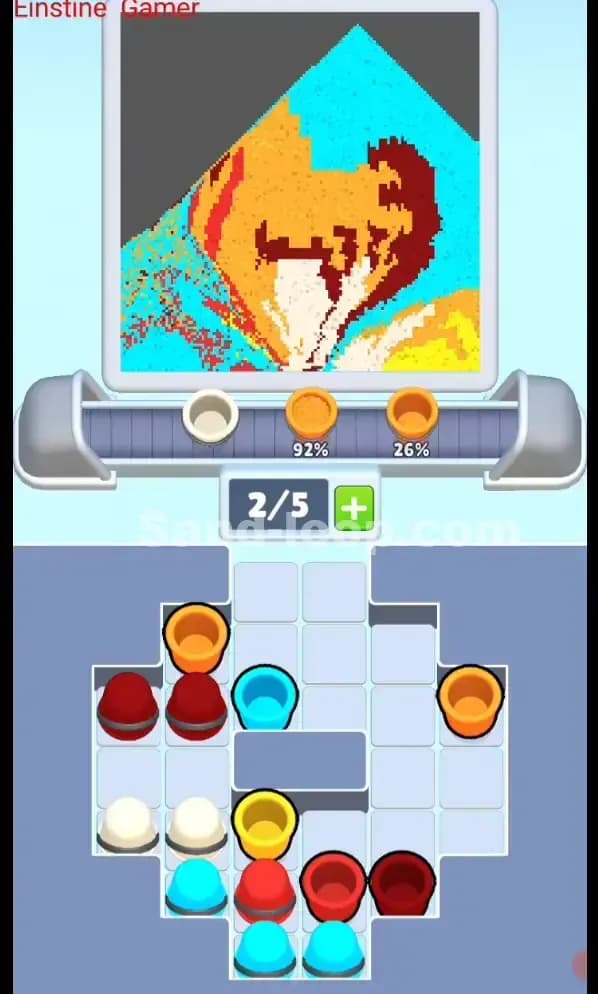
Start by loading one red cup and one dark red cup onto the belt. Don't fill all five slots immediately—that's the trap. You want to move slowly through the opening so that as you pour red and dark red onto the rooster's head and tail, the buried yellow cups naturally rise in the tray. Tap pour on your first red, wait for it to reach the nozzle, then decide: do you load a second red right now, or do you load a cyan to prep for background work? I recommend load one red, let it pour, load one dark red, let it pour, then pause and assess. Keep your belt at 2–3 cups at this stage. This rhythm gives you breathing room and lets you watch the color meters climb without panic.

Unblocking Plan: Free Yellow Without Jam

After your first two pours (one red, one dark red), your meter shows progress on the rooster's head and tail. Now comes the crucial move: you need to free yellow without jamming your belt. Here's the exact sequence: load one cream cup (you can grab it easily from the side stack) and one cyan cup. These are "setup" cups that help you unlock yellow. Pour the cream cup onto the rooster's feet—this fills one of those white regions safely. Pour the cyan onto the background—this builds background coverage and buys you time. After these two pours, check your tray: yellow should now be closer to the surface. Load one yellow cup immediately, then load one more cream cup. This staggered approach ensures yellow enters your belt at the right moment without you sitting idle waiting for it.

Mid-Game Control: The Cycling Pattern

Once yellow is flowing, you're in the heart of Sand Loop 159. Now you're cycling: pour yellow for the body, alternate with dark red for tail details, sneak in cream for feet, and use cyan for background fill. The key rhythm is yellow, dark red, yellow, cyan, yellow, cream, repeat with adjustments. Watch your color meters obsessively. If yellow hits 80% of its quota but you've only done 40% of red, you know you need more red pours coming. Load colors in pairs (one on the belt, one waiting), and always keep at least one empty slot. That empty slot is your "bail out" zone—if you load the wrong cup or realize you miscalculated, you can pause, clear that slot, and reload. Never fill all five slots unless you're absolutely certain the next four cups are perfect. Maintain gaps.

End-Game Precision: The Final 10–20%

As you approach the finish line, your color meters are mostly full, but you've got stubborn remnants: maybe 5% of dark red left, 8% of cream, and just enough cyan to finish the background. This is where lead-time timing becomes critical. You need to hit those last few pours without overshooting. Load one dark red cup and watch it travel down the belt. As it pours, track the meter: does it hit the line? Good. If it overshoots, reload with caution—maybe you needed only a half-pour, so you'll need to load a different color next to dilute it. For the final cream and cyan, do the same: tap, watch, adjust. Use your empty slot to pause between pours if you need to reassess. The rooster's done when all meters turn green.

If You Mess Up: Recovery Tactics

Scenario 1: You loaded three reds in a row and now your belt is clogged. Stop pouring. Use your empty slot to load a yellow or cream cup instead. This forces out one of the reds and rebalances your belt. Next time, load red-yellow-red-cream instead of red-red-red.

Scenario 2: Red bled into the yellow body. You can't undo that, but you can mitigate: immediately switch to pure yellow pours for the next two cycles to re-define the boundary. The level is forgiving enough that minor color overlaps don't fail you—only major overshoots do.

Scenario 3: You ran out of a color (e.g., no more dark red cups available). This means you stacked too many of one color early. Restart and adjust your opening rhythm—load more variety earlier, even if it feels inefficient. Diversity in your belt is safer than bulk of one color.


Why This Strategy Works in Sand Loop 159

Conveyor Lead Time and Slot Economy

This walkthrough works because it respects the two-move lookahead window. When you tap pour, the cup doesn't arrive instantly—there's a 1–2 second delay. This means you're always playing two moves ahead: "I'm pouring this red now, so I need to load yellow next to prepare for the next visual moment." By keeping your belt at 3–4 cups (not 5), you create the flexibility to swap decisions mid-sequence. If you load five cups rigid-style, you're locked into that order, and if cup three is the wrong color, you're committed to watching a mistake happen. The empty slot breaks that lock.

Preventing Background Overfill

Sand Loop 159 has a cyan background that can easily be over-poured. The strategy staggers cyan cups and pairs them with foreground colors (yellow, red, cream), which forces you to balance. You're not doing five cyans in a row—you're doing one cyan, one yellow, one cyan, one red. This pacing prevents the background from filling too fast and locking you out of the detail work. The rooster's details are your priority; the background is secondary. The walkthrough reflects that priority.

Consistency Across Runs

If you follow this rhythm (red, dark red, cream, cyan, repeat), you'll hit Sand Loop 159 with almost the same result every time. You're not relying on perfect reflexes or getting lucky with cup stacking. You're using a proven sequence that accounts for the level's mechanical quirks. Even if you make a small mistake (one extra yellow pour), you're positioned to recover because your belt always has an empty slot and your color loads are balanced.


Extra Tips and Adaptations for Levels Like Sand Loop 159

Six Mistakes and Their Fixes

  1. Mistake: Filling all five belt slots in the opening. Fix: Always keep one slot empty until you're in the final pour of a cycle. This habit applies to Sand Loop 159 and every similar level.

  2. Mistake: Loading yellow before it's unblocked. Fix: Count how many cups are on top of yellow in your tray. Load that many "other" cups first, then grab yellow.

  3. Mistake: Pouring red continuously without breaks. Fix: Pour one red, load a different color, pour that one, then load another red. Breaks prevent accidental overshoots.

  4. Mistake: Ignoring the color meters until you're done. Fix: Glance at the meters after every pour. Sand Loop 159 gives you clear visual feedback—use it to adjust your next move.

  5. Mistake: Stalling because you "feel" you need a color that's buried. Fix: Load cups in front of it instead. Clearing the tray is part of the puzzle, not a waste.

  6. Mistake: Assuming you can freeform pour once you "feel" the rhythm. Fix: Freeform pouring works for earlier levels, but Sand Loop 159 requires deliberation. Stay methodical even if it feels slow.

Boosters (If Available)

If your version of Sand Loop 159 includes booster options, here's when they help:

  • Extra Slot: Use this if you've already messed up the opening and your belt is jammed. One extra slot can be a lifesaver, but it's not necessary if you follow the walkthrough.
  • Slow Belt: Activate this in the mid-game phase when you're managing fine color transitions (red to dark red, yellow to cream). The slower speed gives you more reaction time to tap and react.
  • Undo: Save this for the final 15% if you accidentally overfill one color by one pour. Undo the last pour and reload the right cup.

Don't rely on boosters for Sand Loop 159 unless you've already spent three or more attempts—the level is designed to be completable without them if you plan carefully.

Final Thoughts

Sand Loop 159 is a gateway level that teaches you the game's real depth: resource management and lookahead, not twitch reflexes. Once you beat it with this strategy, you'll notice the same patterns in harder levels. Keep your belt balanced, respect lead times, and always leave space to breathe. If you get stuck, take a break, re-read the unblocking plan section, and try again with fresh eyes.

For more in-depth walkthroughs and community tips on Sand Loop 159 and other challenging levels, check out sand-loop.com—there's a thriving community sharing strategies and videos. You've got this!