Sand Loop Level 3 Solution Walkthrough | Sand Loop 3

How to solve Sand Loop level 3? Get instant solution for Sand Loop 3 with our step by step solution & video walkthrough.
Share Sand Loop Level 3 Guide:
Sand Loop Level 3 Gameplay
Sand Loop Level 3 Solution 1
Sand Loop Level 3 Solution 2
Sand Loop Level 3 Solution 3

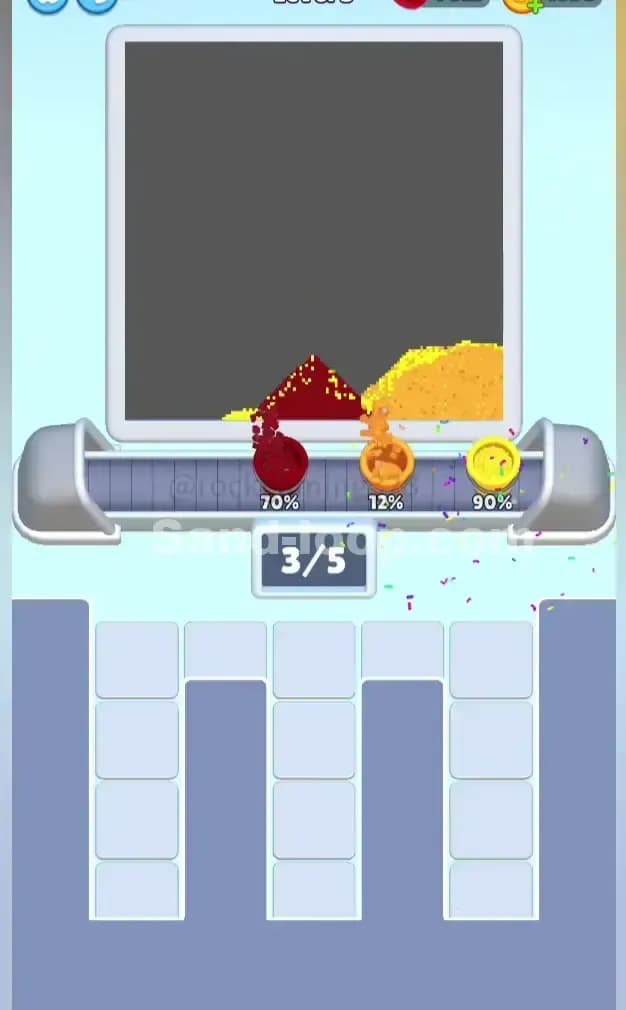
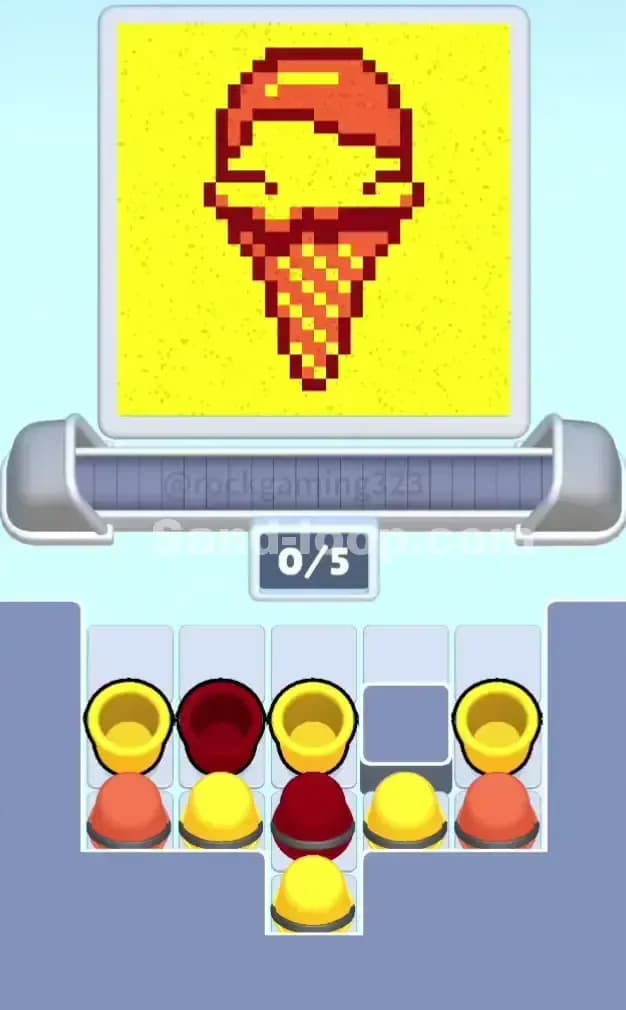
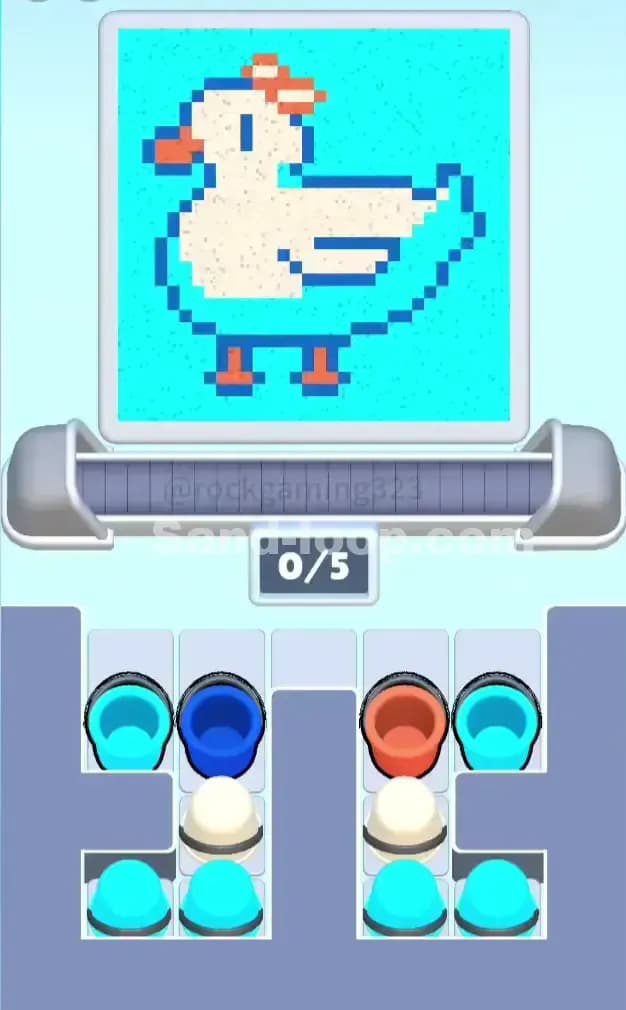
Sand Loop Level 3 Snapshot

The Canvas Goal

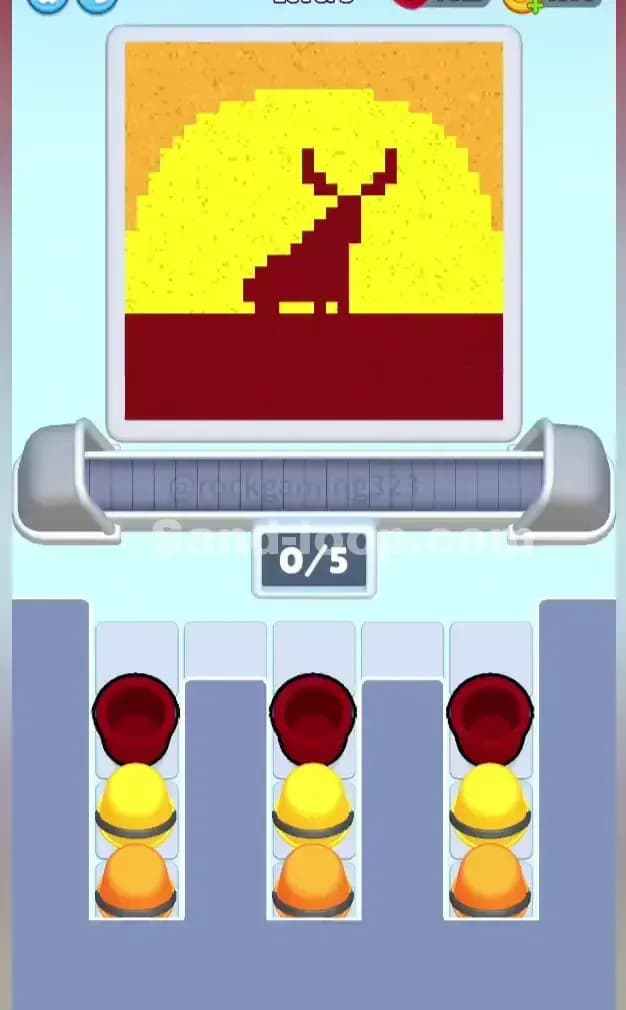
Sand Loop Level 3 tasks you with filling a vibrant sunset scene: a bright yellow sky dominates the upper two-thirds of the canvas, while a deep maroon/burgundy landscape occupies the lower third. A silhouetted deer stands in the foreground—a striking visual that depends on precise color layering. The color progress meters at the top show you're currently at 0/5 slots filled, meaning you've got a full conveyor belt ahead of you and zero margin for waste. You need to balance yellow (sky) and maroon (land) without accidentally pouring orange or mixing colors in ways that muddy the artwork.

Starting Setup

You're looking at a 0/5 conveyor capacity—the belt is completely empty and ready to receive cups. The supply tray below reveals a stacked puzzle: three columns of cups, each holding a maroon cup on top, a yellow cup in the middle, and an orange cup at the bottom. This means your first pours of maroon are immediately available, but you'll need to cycle through and unblock cups carefully to access the yellows and oranges without jamming the belt. The conveyor itself has plenty of headroom, so your real challenge is sequencing, not running out of physical space.

Win Condition

Complete the picture by filling the yellow sky and maroon landscape to their target levels while keeping the orange accents minimal and controlled. You win when all color progress bars hit green. Waste a single pour of the wrong color onto a nearly-complete zone, and you'll overshoot—forcing a restart or burning an attempt.


Why Sand Loop 3 Feels Hard (The Actual Bottleneck)

The Real Problem: Yellow-to-Maroon Transition Timing

The crux of Sand Loop Level 3 isn't raw conveyor speed or slot count—it's nailing the handoff between the sky (yellow) and the landscape (maroon). The yellow background is enormous and will consume most of your pours, but if you keep feeding yellow cups too long, you'll overshoot the yellow meter before the maroon meter even gets started. Conversely, if you switch to maroon too early, the sky stays pale and incomplete. You have to predict exactly when the yellow hits "full" and have a maroon cup already queued to arrive at the pour point at that moment. That lead-time calculation is brutal.

Two Classic Traps

First trap: The Orange Bottleneck. Orange cups are buried at the bottom of each stack. If you greedily cycle cups to reach them early, you'll either overfeed orange (creating muddy blending) or clog your slots trying to shuffle them around. Sand Loop 3 demands you ignore orange until the very end—treat it as a final accent, not a priority.

Second trap: Yellow Overshoot. The yellow sky is so large that it's easy to keep tapping yellow cups and lose track of the meter climbing. By the time you switch to maroon, you've already shot past the target. I choked this timing twice before I learned to watch the meter like a hawk and anticipate the switch two pours before yellow maxes out.

Why It Looks Easy But Isn't

Sand Loop 3 has a clean visual and straightforward color palette. It feels like a tutorial, so you might rush the early pours and improvise mid-level. That confidence trap is real. The level is actually a rhythm-timing puzzle disguised as a relaxing pixel-art game.


Step-by-Step Walkthrough to Beat Sand Loop Level 3

Opening Rhythm: Load Maroon First, Then Plan the Swap

Start by tapping the first maroon cup to load it onto the conveyor belt. Do this immediately—there's no reason to hesitate. Watch it move along the belt, and time your second tap so the next maroon cup arrives at the pour point right after the first finishes. You'll do two, maybe three maroon pours to establish the deep burgundy landscape base. Why maroon first? It's on top of the stack and immediately accessible, and the landscape needs a solid foundation before you start layering yellow sky on top.

While those first maroons are flowing, keep one slot on the conveyor deliberately empty. This empty slot is your pressure relief—it prevents the belt from jamming if you miscalculate a cup's arrival time. Maintaining a 1-2 slot gap is the cardinal rule of Sand Loop Level 3.

Unblocking Plan: Free Yellow Cups Without Jamming

After your 2–3 maroon pours, you need yellow in the queue. The second cup in each stack is yellow, but it's still "blocked" by the maroon cup that's now riding the belt. Here's the safe move: tap a yellow cup from a different column. You have three columns, so rotate between them. Tap column one's maroon (done), then column two's maroon, then column three's maroon. By the time you return to column one, that maroon has cycled out and the yellow below it is ready to tap.

This rotation strategy also distributes the orange cups beneath—you're not rushing to free all three orange cups at once, which would force you to use them. Instead, they stay buried, harmless, until late-game.

Mid-Game Control: Sync the Yellow Push

Now you're roughly 30% of the way through Sand Loop Level 3, and the yellow meter is climbing steadily. This is where lead-time becomes critical. The conveyor has a fixed "travel time"—a cup tapped now reaches the pour point 2–3 seconds later. Your job is to anticipate that delay. When you see the yellow meter at about 80% full, start tapping maroon cups now, knowing they'll arrive at the pour point just as yellow completes.

Maintain your 1-slot gap religiously during this phase. Don't panic-tap cups because you're worried about running out. Instead, tap in a calm, deliberate rhythm: yellow, pause, yellow, pause, then maroon (leading), then another cup type, then a pause. This rhythm prevents collisions and keeps your mental model of the belt clear.

End-Game Precision: Finish Yellow and Maroon, Ignore Orange

By the time you're in the final 15%, your yellow and maroon meters should both be climbing toward the green zone. Taper your pours—stop tapping as frequently. Let the belt do its job with fewer cups. If yellow is at 95% and maroon is at 80%, send one more yellow and two maroons, then stop tapping. Watch the meters complete.

Orange should not touch the canvas unless you've somehow underfilled a color and have "room" for accent pours. In Sand Loop 3, orange is almost always a trap. Leave those cups on the tray.

If You Mess Up: Recovery Tactics

If you've overfed yellow and it's now at 110%, the level is likely unrecoverable in a single run—accept the loss and restart. But if you're only 5–10% over and maroon is still far from completion, you can recover by shifting all remaining taps to maroon and letting it climb while yellow "sits." This doesn't undo the overshoot, but it might bring maroon high enough that the level counts it as a win if there's any degree of completion tolerance.

If you've clogged the belt (five cups stacked and nothing moving), tap nothing for 5 seconds and wait for cups to pour out and free slots. Panic-tapping will only jam it worse.


Why This Strategy Works in Sand Loop 3

Conveyor Lead Time + Slot Economy

By rotating columns and maintaining a 1-slot gap, you avoid the "belt deadlock" that kills most Sand Loop 3 runs. The lead-time math becomes simple: you know a cup takes ~2 seconds to travel, so tapping now means "pour in 2 seconds." This turns the puzzle from guesswork into a predictable rhythm. You're not reacting—you're planning.

Controlling Waste and Preventing Overshoot

The strategy prioritizes early observation over early action. You watch the yellow meter and let it guide your decisions rather than committing to a preset pour sequence. This flexibility is what saves you from the classic "painted myself into a corner" failure mode. By delaying the yellow-to-maroon transition until you see the meter clearly, you eliminate guesswork.

Consistency Across Runs

If Sand Loop Level 3 has an attempt limit (three strikes), this approach minimizes variance. You're not hoping for perfect timing—you're building timing into your systematic column rotation and gap maintenance. Most players who beat it on the first try have internalized this rhythm; most who retry are abandoning the plan and winging it.


Extra Tips and Adaptations for Levels Like Sand Loop 3

Six Mistakes and Fixes

Mistake 1: Tapping maroon cups back-to-back with no gap.
Fix: After two maroons, pause for 1–2 seconds and watch the belt. This single pause prevents belt congestion and gives your eyes time to track the color meter.

Mistake 2: Switching to yellow too early.
Fix: Wait until the maroon meter is visibly climbing—aim for 20% before introducing yellow. This ensures the landscape foundation is solid.

Mistake 3: Cycling columns in the wrong order.
Fix: Pick a column order (left → middle → right → repeat) and stick to it. Random switching causes you to tap the same color twice in a row, breaking your rhythm.

Mistake 4: Tapping orange cups out of curiosity.
Fix: Orange is a late-game accent only. Don't touch the orange cups until both yellow and maroon are within 10% of completion.

Mistake 5: Not watching the conveyor—just watching the canvas.
Fix: The canvas meter lags behind the actual pour. Watch the conveyor belt to see cups approaching the pour point and anticipate the meter jump.

Mistake 6: Panic-tapping when you think you're running out of time.
Fix: Sand Loop 3 is never about speed—it's about precision. If you feel rushed, slow down. Tap fewer cups and let them queue safely.

When to Use Boosters

If your version of Sand Loop 3 includes an Extra Slot booster, use it only if you're genuinely jamming on your third or fourth attempt—not on your first run. A booster masks the real skill of slot management. If you unlock an Undo feature, save it for the moment you realize you've overfed a color past 100%; one undo can turn a dead run into a clean win.

Closing Encouragement

Sand Loop Level 3 is the level where you stop treating the game like a casual paint-by-numbers and start thinking like a puzzle solver. Once you nail the yellow-to-maroon transition and internalize the column rotation, you'll breeze through harder levels with the same system. You've got this—watch the meters, respect the lead time, and keep that 1-slot gap sacred. For more strategies and community solutions, visit sand-loop.com and share your wins!